


Both air-cooled and water-cooled refrigeration units have their own distinct characteristics and are suited for different types of cold storage projects. The choice between them should be based on specific requirements and the client’s preferences.
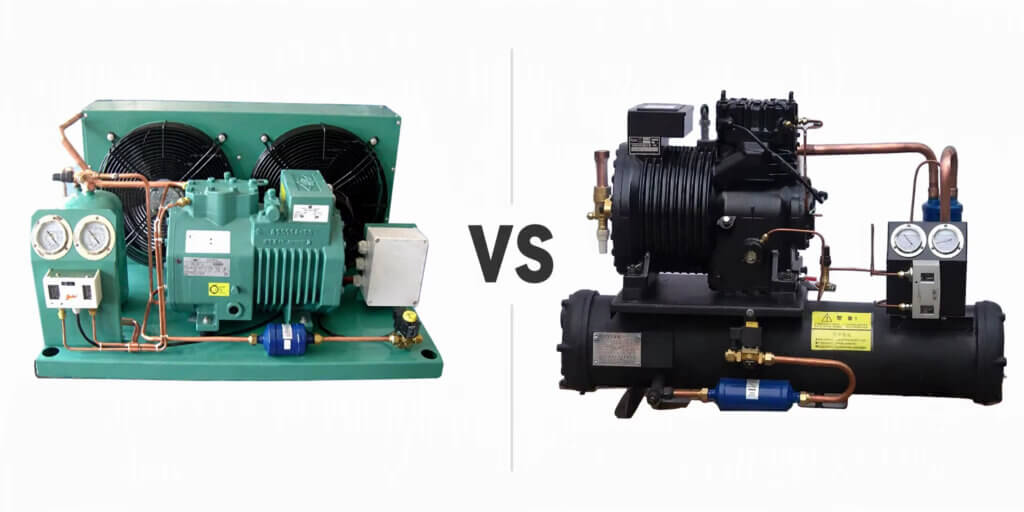
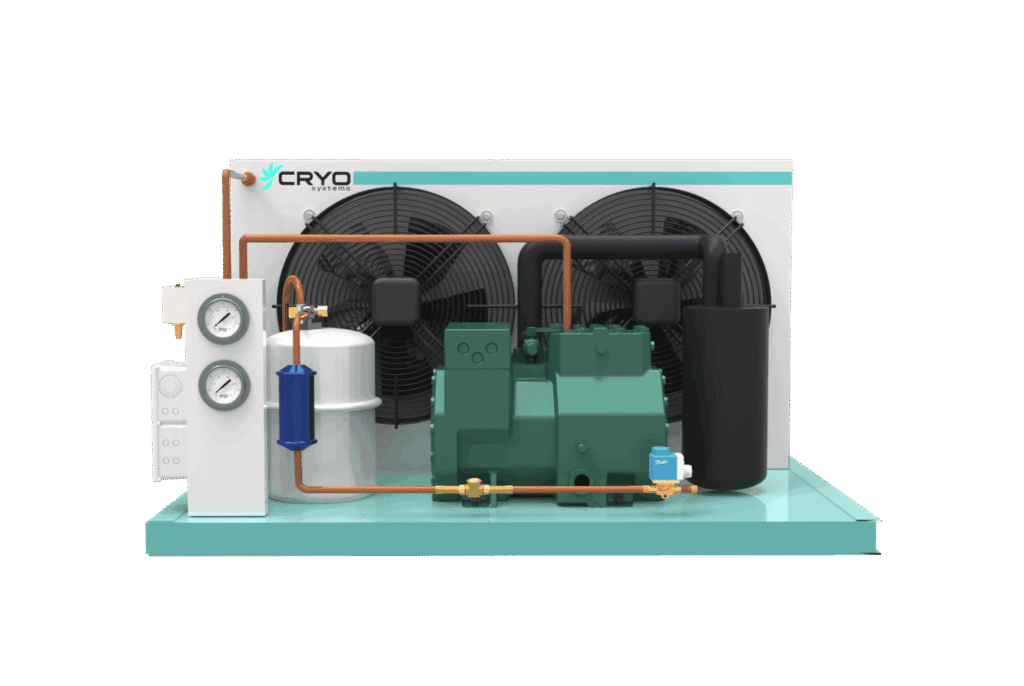
What Is an Air-Cooled Condensing Unit?
An air-cooled condensing unit pulls outside (or room) air across finned coils to dissipate heat. It is the most common choice for small and mid-sized commercial refrigeration, including walk-in coolers, reach-in freezers, and ice machines.
Advantages of Air-Cooled Refrigeration
- Lower upfront cost. There is no cooling tower, water piping, or water treatment equipment to buy and install.
- Simpler installation. Many units are plug-and-play or need only refrigerant lines and electrical connections.
- Lower water use. Air-cooled systems do not consume water for heat rejection, which matters in drought-prone regions and where water is expensive.
- Easier maintenance. Routine care is mostly coil cleaning, fan checks, and filter changes.
- Fewer freeze and corrosion concerns. No water loop means no scale, mineral buildup, or burst pipes in cold weather.
Drawbacks of Air-Cooled Refrigeration
- Efficiency drops in hot weather. Condensing temperature rises with ambient temperature, so compressors work harder on hot days. The refrigeration energy efficiency of an air-cooled condensing unit falls as outdoor temperatures climb.
- Heat and noise. Indoor units dump heat into the room, and fans can be loud.
- Larger footprint for big loads. Large capacities need substantial coil surface area and airflow.
- Dirt-sensitive. Dusty, greasy, or cottony environments can clog coils and cut performance quickly.
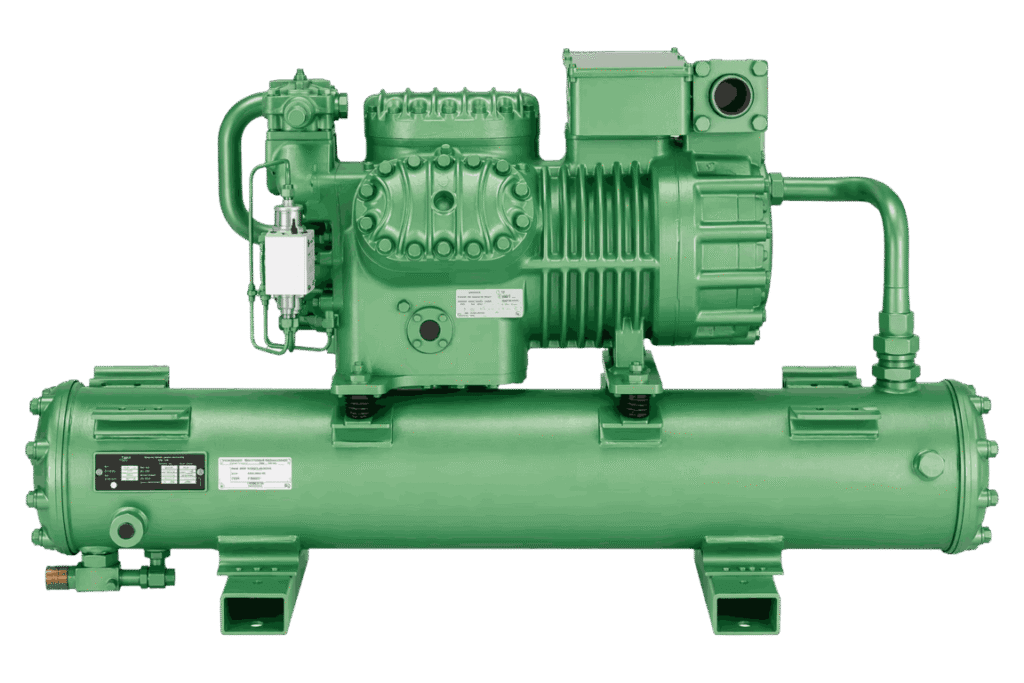
What Is a Water-Cooled Condensing Unit?
A water-cooled condensing unit transfers heat from the refrigerant into water flowing through a shell-and-tube or plate heat exchanger. That water is then cooled by a cooling tower or chiller and recirculated, or, in older once-through designs, discharged.
Advantages of Water-Cooled Refrigeration
- Higher energy efficiency. Water absorbs heat far better than air, allowing lower and more stable condensing temperatures. That often means lower compressor energy use, especially in hot climates.
- Consistent performance. Output stays steady regardless of summer heat waves.
- Quieter operation. No large condenser fans running near your workspace.
- Compact and indoor-friendly. Heat is carried away by water, so the unit does not heat up the room and can be installed in tight mechanical spaces.
- Longer equipment life. Lower head pressures put less stress on the compressor.
Drawbacks of Water-Cooled Refrigeration
- Higher upfront cost. You pay for the unit plus cooling towers, pumps, piping, and controls.
- Water consumption. Cooling towers lose water to evaporation and blowdown, and once-through systems can use enormous volumes.
- More maintenance. Water treatment, scale and algae control, and tower servicing are ongoing needs.
- Risk of leaks and freeze damage. Water loops require protection in cold climates.
- Regulatory considerations. Some municipalities restrict or ban once-through cooling.
Air-Cooled vs. Water-Cooled Refrigeration: Side-by-Side Comparison
| Factor | Air-Cooled | Water-Cooled |
|---|---|---|
| Upfront cost | Lower | Higher |
| Energy efficiency | Good; varies with ambient temperature | Excellent; stable in all seasons |
| Water use | None | Moderate to high |
| Maintenance | Simple (coils, fans) | More involved (water treatment, towers) |
| Noise | Louder fans | Quieter |
| Indoor heat output | High if installed indoors | Minimal |
| Best for | Small to mid-sized operations, cooler climates | Large loads, hot climates, tight indoor spaces |
| Lifespan | Good | Often longer with proper care |
Key Factors to Consider Before You Decide
1. Climate and Ambient Temperature
If you operate in a hot region such as the Southwest or Gulf Coast, air-cooled condensers can struggle during peak summer. Water-cooled systems keep condensing temperatures steadier. In air-cooled vs. water-cooled refrigeration comparisons for hot regions, that stability protects refrigeration energy efficiency. In mild or cold climates, air-cooled systems perform very well, and the efficiency gap narrows.
2. Cooling Capacity and Load Size
Small and medium systems, such as a restaurant walk-in or convenience store cases, generally favor air-cooled units for their simplicity. Large industrial, supermarket, or cold storage facilities often benefit from water-cooled or evaporative systems because of the energy savings at scale.
3. Water Availability and Cost
Check your local water rates, restrictions, and sustainability goals. If water is scarce or expensive, air-cooled is usually the smarter pick. Always account for sewer charges and treatment chemicals in your water-cooled estimate.
4. Installation Space and Ventilation
Air-cooled units need unobstructed airflow and clean surroundings. Water-cooled units need space for a tower or chiller and piping. If you have a tight mechanical room with poor ventilation, water-cooled may be the only practical choice.
5. Total Cost of Ownership
Don’t decide on purchase price alone. Compare installation, energy, water, maintenance, and expected lifespan over 10 to 15 years. A water-cooled system can cost more at the start yet pay back through lower electricity bills in high-load applications.
6. Maintenance Capability
Do you have in-house technicians or a service contract? Water-cooled systems reward consistent care and punish neglect. If your team is small, the simplicity of air-cooled equipment is a real advantage.
Which Option Is Best for Your Business?
Choose an air-cooled refrigeration unit if you:
- Run a small to mid-sized operation (restaurant, café, convenience store, small food processor)
- Want the lowest upfront investment and simple installation
- Operate in a moderate climate or where water is limited
- Prefer minimal maintenance
Choose a water-cooled refrigeration unit if you:
- Have large or continuous refrigeration loads
- Operate in a consistently hot climate
- Need quiet operation or have limited ventilation indoors
- Prioritize long-term energy savings and can support water treatment and maintenance