

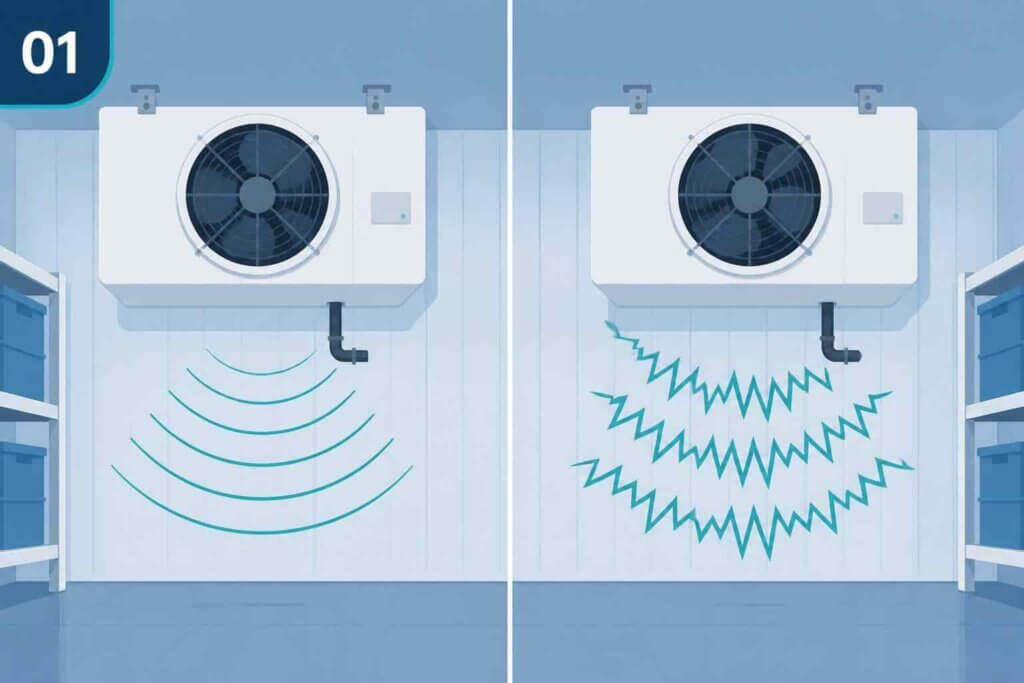
A cold room fan plays an important role in circulating cold air and maintaining a stable temperature throughout the storage space. During normal operation, motors, bearings, and fan blades naturally produce some sound. However, when cold room fan noise becomes noticeably louder than before, it may indicate that the equipment needs inspection or maintenance.
This is particularly common with refrigeration equipment that has been operating for many years. Components gradually wear, mounting points may loosen, and dust or debris can accumulate around the fan and heat exchanger.
A noisy cold room fan does not always mean the entire fan needs to be replaced. In many cases, the source can be traced to the motor, bearings, fan blades, mounting structure, or insufficient maintenance.
Understanding why the sound has changed is the first step toward effective cold room fan troubleshooting and preventing a small issue from becoming a more serious refrigeration problem.
1. Motor and Shaft Wear Can Increase Vibration
The cold room fan motor is one of the first components to inspect when an older fan starts becoming noticeably louder.
After long-term operation, wear on the motor shaft can make rotation less stable. Instead of rotating smoothly, the assembly may develop additional vibration. That vibration can then be transferred to the fan housing, mounting structure, or surrounding refrigeration equipment, making the overall operating sound more noticeable.
Long-term use combined with insufficient maintenance can increase wear on the motor shaft, resulting in greater vibration and noise.
2. Worn Bearings May Cause Unusual Fan Noise
Bearings allow the motor and fan assembly to rotate smoothly with relatively low friction.
As bearings wear, rotation can become rougher. The fan may then produce abnormal mechanical sounds in addition to increased vibration. This type of problem is especially important because the noise may continue to increase as bearing condition deteriorates.
If the sound clearly comes from inside the motor rather than from airflow or a loose external component, the motor and bearing condition should be checked by a qualified refrigeration technician. When a bearing or motor has already suffered significant damage, replacing the affected component may be more appropriate than continuing to operate it.
3. Loose or Deformed Fan Blades Create Imbalance
The fan blades themselves can also become a major source of cold room fan vibration.
During long periods of high-speed rotation, fan blades may loosen or gradually deform due to material fatigue. Once the blades are no longer properly positioned or balanced, airflow can become less stable and vibration can increase.
Loose or deformed fan blades can affect airflow and pressure while significantly increasing noise.
During cold room fan troubleshooting, technicians should therefore inspect the blades for:
- Loose fan blades
- Visible blade deformation
- Uneven blade positioning
- Damage to the fan assembly
- Abnormal movement while rotating
Continuing to operate an imbalanced fan may place additional stress on the motor, shaft, and mounting points.
4. Dust and Debris Buildup Can Make Operation Noisier
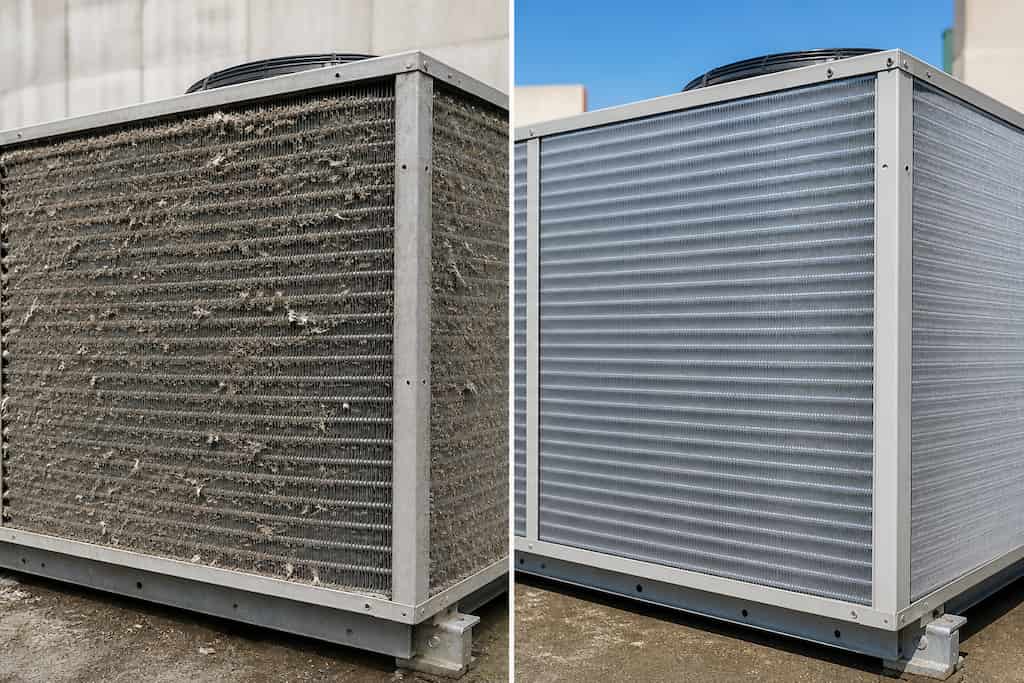
Not every noisy cold room fan is caused by a damaged mechanical component.
Older refrigeration equipment that has not been cleaned regularly may accumulate dust and debris. Prolonged operation without effective cleaning can degrade cooling performance and increase friction and noise between mechanical parts.
Dirt accumulation can also make it more difficult to identify other problems because the system is no longer operating under clean, normal conditions. Regular cleaning should therefore be part of cold room fan maintenance, especially in facilities where airborne particles, packaging debris, or other contaminants may accumulate around refrigeration equipment.
5. Loose Bolts and Fixtures Can Amplify Fan Vibration
Another common issue with older equipment is not inside the fan at all—it is the mounting hardware around it.
Cold room equipment produces some vibration during normal operation. Over months or years, repeated refrigeration equipment vibration can gradually loosen bolts, nuts, brackets, and mounting fixtures.
Once this happens, relatively small vibrations can become much more noticeable. Sometimes correcting a loose mounting point can significantly reduce noise without requiring replacement of the fan itself.
6. Vibration May Be Transferred to the Supporting Structure
The fan may not always be producing all of the noise you hear.
Mechanical vibration can travel from refrigeration equipment into its mounting structure, floor, wall, or support frame. If the supporting structure amplifies that vibration, the equipment may sound much louder even though the original vibration begins at a relatively small component.
For equipment with noticeable vibration, it is recommended to consider measures such as anti‑vibration pads or reinforcement of supporting structures to reduce vibration and noise.
How Should You Inspect an Older Noisy Cold Room Fan?
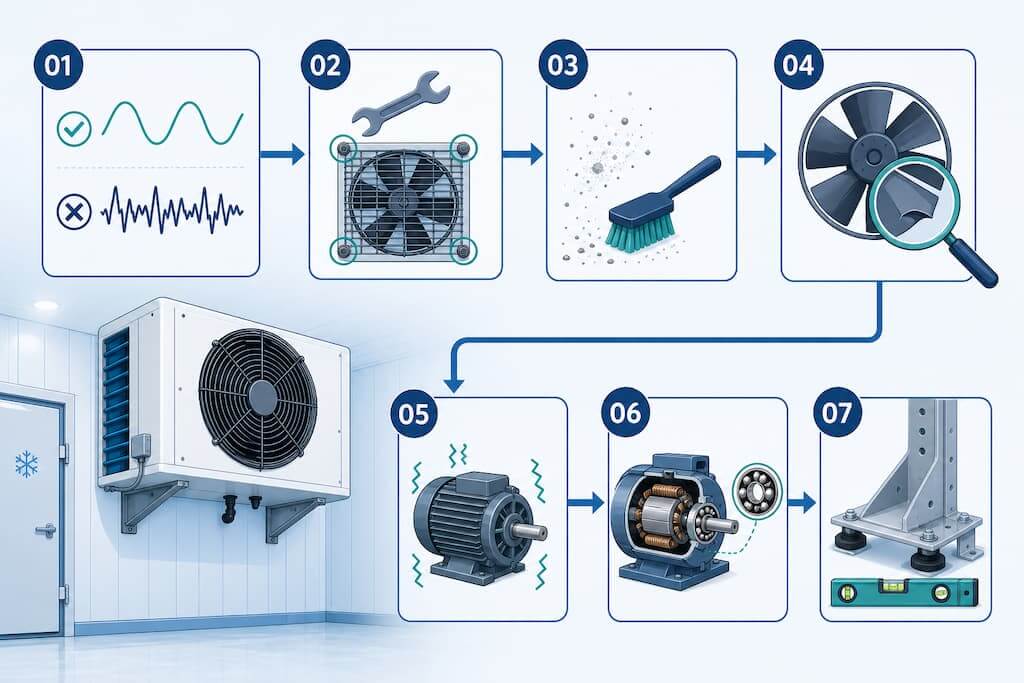
When an older fan starts making more noise than usual, a systematic inspection can make troubleshooting easier.
Start by comparing the current sound with the fan’s previous operating condition. A stable mechanical hum may simply be part of normal operation, while a noticeable change in sound or vibration deserves closer attention.
Then inspect the equipment in a logical order:
- Check whether bolts, mounting points, or fan guards have become loose.
- Look for dust and debris around the fan and refrigeration components.
- Inspect the fan blades for looseness, deformation, or visible damage.
- Check whether the motor and shaft are producing excessive vibration.
- Inspect the motor and bearings if abnormal mechanical noise persists.
- Examine the support structure and vibration-damping measures.
When Should a Noisy Cold Room Fan Be Repaired or Replaced?
Not every noisy fan needs to be replaced.
If the problem comes from dirt buildup or loose fixtures, cleaning and tightening may be sufficient. If vibration is being transferred through the mounting structure, additional damping or reinforcement may help.
However, replacement should be considered when inspection identifies damaged components such as worn bearings, a faulty motor, or damaged fan blades.
For problems involving internal motor components or persistent abnormal vibration, professional inspection is recommended. This helps determine whether the affected component can be repaired safely or whether replacement is the more suitable option.
If your cold room equipment is producing unusual noise and you are unsure whether the issue comes from the fan, motor, mounting structure, or another refrigeration component, CRYO SYSTEMS can help evaluate the refrigeration requirements and provide a suitable cold room solution.