


Most people think the oven is the heart of a bakery. But for a successful commercial bakery, the walk-in cooler is the real hero. It acts like an invisible baker that controls the rhythm of production.
It is essential for many tasks. For example, it handles the cold fermentation for baguettes and keeps butter at the right temperature for Danish pastries. It also stores large amounts of fresh fruit and dairy products. A well-designed cooler with precise temperature and humidity does more than just improve the flavor of the bread. It also helps bakeries save on labor costs and reduce waste.
The Triple Identity of a Bread Baking Walk in Cooler
The Flavor Magician: Cold Fermentation
Modern bakeries, especially those selling European bread and sourdough, rely on “cold fermentation.” They keep shaped dough in a cooler at 2°C to 4°C for 12 to 24 hours. This is not just a delay tactic. It is a precise chemical process.
- Building Complex Flavors: Low temperatures slow down commercial yeast. However, natural bacteria remain active. They break down starch and protein to create organic acids and esters. This gives the bread a deep wheat aroma and a pleasant sour taste.
- Better Dough Structure: Long resting times allow flour to fully absorb water. Enzymes strengthen the gluten network naturally. This makes the dough more elastic and better at holding gas.
- The Secret to a Perfect Crust: During cold fermentation, enzymes turn starch into reducing sugars. When baked, these sugars react to heat. This creates a deep caramel color and a very crispy crust. It also helps the bread stay fresh longer.
The Metronome of Production
Without a walk-in cooler, the head baker faces a tough schedule. To ensure the shelves are full of fresh bread in the morning, they must wake up at 2:00 AM to mix, ferment, and shape the dough.
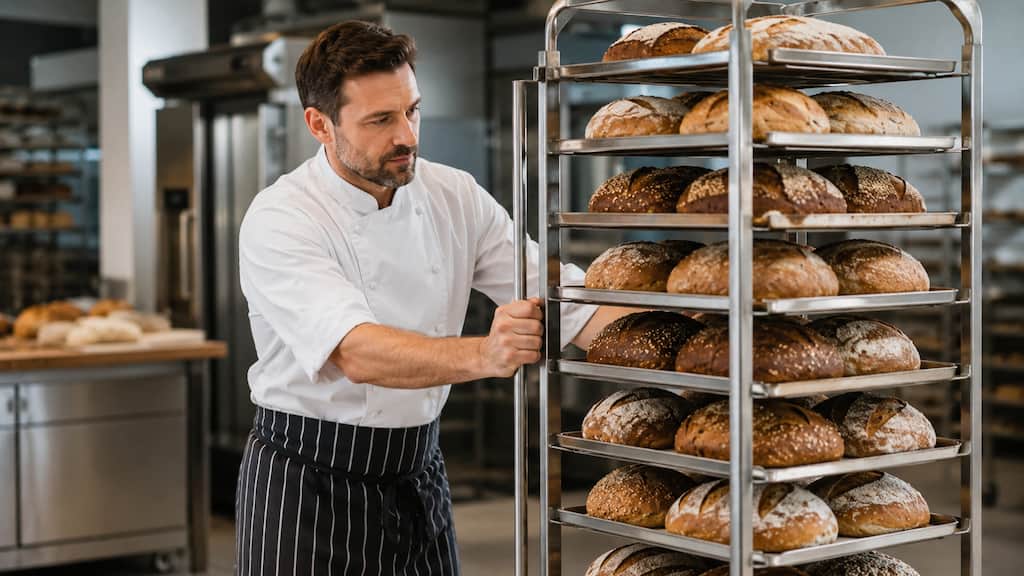
The cooler completely changes the bakery’s timeline. Bakers can finish dividing and shaping the dough during normal working hours in the afternoon. They then push the dough directly into the cooler. The next morning, early-shift staff simply take the dough out. After a short time at room temperature (or using a specialized Retarder Proofer), it is ready for the oven.
Furthermore, the bread baking walk in cooler acts as a “buffer” for busy times. During holidays or large orders, bakeries can store a large amount of pre-made dough. This ensures they have the capacity to handle the rush without causing chaos in the kitchen.
The Constant-Temperature Vault
In a commercial bakery, ingredient costs usually take up 25% to 35% of total revenue. The bakery cold storage acts as a vault to protect these valuable assets.
| Storage Category | Specific Stored Products | Recommended Storage Temperature | Main Product Uses |
|---|---|---|---|
| Dairy Products & Eggs | Whipping Cream / Fresh Milk | 2°C – 6°C | Cake frosting, mousse making, and liquid base for dough. |
| Unsalted Butter / Cream Cheese | 2°C – 6°C | Dough mixing, French tart shells, cheesecake, and buttercream. | |
| Pasteurized Liquid Whole Egg | 2°C – 5°C | Brioche dough, custard cream, and egg wash before baking. | |
| Specialty Laminating Fats | Sheet Butter / Laminating Butter | 2°C – 4°C (strictly controlled) | Lamination for croissants, Danish pastries, galette des rois, and other laminated products. Must maintain the same firmness as the dough. |
| Shortening / Margarine | 2°C – 6°C | Alternative fat for budget laminated products or Chinese-style pastries, such as salted egg yolk pastry. | |
| Starters & Leavening Agents | Natural Starter (Levain) / Pre-Ferment | 4°C – 8°C (slow fermentation) | Core fermentation for artisan bread, baguettes, and sourdough bread; develops flavor. |
| Fresh Yeast (Block Form) | 0°C – 4°C (dormant state) | Fast fermentation for premium toast bread and Japanese-style sweet bread. It easily self-digests and develops an odor at room temperature. | |
| Premium Flavor Ingredients & Fresh Produce | Imported Fruit Purée / Fresh Berries | 2°C – 6°C (high humidity required) | French mousse, macaron fillings, and fruit toppings for Danish pastries. |
| Pure Nut Paste (Pistachio / Hazelnut) | 2°C – 6°C (sealed) | Croissant fillings and bread spreads. Refrigeration helps prevent oxidation and oil separation. | |
| Couverture Chocolate / Chocolate Coins | 12°C – 18°C (separate zone) | Ganache fillings and handmade nama chocolate. Do not store in a 2°C cold room, as condensation may cause sugar bloom. | |
| Semi-Finished & Pre-Prepared Products | Refrigerated Fermented Dough (Baguette / Bagel, etc.) | 2°C – 4°C | Retarded fermentation. Shape the previous day, then score and bake directly the next morning. |
| Pre-Made Fillings (Custard / Taro Paste, etc.) | 2°C – 5°C (surface-contact sealed) | Prepared and cooled in advance for quick filling and serving during the morning rush. |
Energy Saving & Daily Maintenance
The bread baking walk-in cooler is a major energy consumer in a bakery. Good operating habits and energy-saving designs can save you a significant amount on electricity bills.
- Install PVC strip curtains or powerful air curtains. These are effective at preventing cold air from escaping when staff frequently enter and exit to retrieve dough during the morning rush.
- Clean the outdoor condenser monthly. Bakery air is full of suspended flour and grease, which easily clogs the condenser fins. This leads to poor heat dissipation and a sharp increase in power consumption. Use a low-pressure air gun or a soft brush to clean the condenser.
- Prevent drain blockages. Ensure that defrost water from the evaporator does not freeze and block the cooler’s drain pipe.
- Use shelves to place different products at different heights. This simple arrangement can greatly improve organization and efficiency in your storage area.