


Building a cold room near the sea, a harbor, or a fishing port is very different from building one in a dry inland warehouse. The basic goal may be the same: keep products at the right temperature. But the operating environment is far harsher.
Salt air, high humidity, seafood residue, frequent washing, wet floors, and heavy loading activity can quickly damage materials that would perform well in a standard cold storage facility. If these risks are not considered during the design stage, the cold room may still work at first, but corrosion, condensation, equipment failure, door damage, and hygiene problems can appear much sooner than expected.
For seafood processors, fish markets, port logistics operators, fishing port cold storages and coastal food storage facilities, durability is not a luxury. It is part of the refrigeration system’s performance. A cold room that cannot resist its environment will cost more to maintain, consume more energy, and create operational downtime.
1. Consider the Marine Environment First
The first mistake many projects make is treating a coastal cold room like a normal indoor cold storage room. In reality, the environment around a fishing port is usually more aggressive.
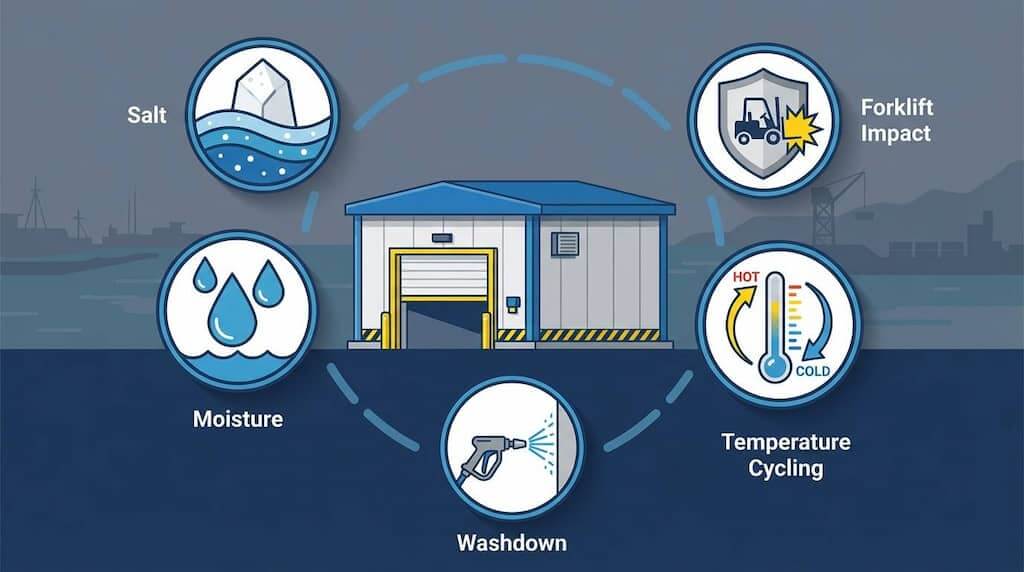
The main risks include:
- Salt carried by sea air
- High relative humidity
- Frequent floor washing
- Seafood liquids, blood, brine, and organic residue
- Temperature differences that create condensation
- Outdoor equipment exposed to wind, rain, and salt spray
Corrosion usually begins at weak points: screws, hinges, brackets, door frames, panel joints, drain edges, evaporator fins, and exposed steel supports.
A good coastal cold room design starts by asking: Which areas will be exposed to salt, moisture, washdown, impact, and temperature cycling?
2. Choose Corrosion-Resistant Materials for the Right Locations
Corrosion protection is one of the most important parts of coastal cold room construction. However, “use stainless steel” is not specific enough. Different metals and coatings perform differently in marine environments.
For exposed hardware such as hinges, locks, handles, bolts, screws, brackets, and support frames, 316 or 316L stainless steel is often preferred over standard 304 stainless steel in high-salt environments.
Cold room panels should also be selected carefully. The insulation core is important, but the metal facing and surface coating matter just as much. In high-risk areas, consider stronger coated steel, stainless steel facings, or other corrosion-resistant finishes.
Depending on the project budget and exposure level, consider:
- High-performance coated steel panels
- Stainless steel panel facings in high-risk zones
- Food-safe and moisture-resistant surface finishes
- Corrosion-resistant trims and flashings
- Well-sealed panel joints
- Proper protection at floor-wall junctions
The best design may not require premium materials everywhere. Instead, use higher-grade materials in the most exposed areas and practical, cost-effective materials in lower-risk zones.
3. Protect Refrigeration Equipment from Salt Air
In coastal cold rooms, refrigeration equipment can suffer as much as the building envelope. Condensers, evaporators, fans, coils, and drain pans are all vulnerable if they are not suitable for the environment.
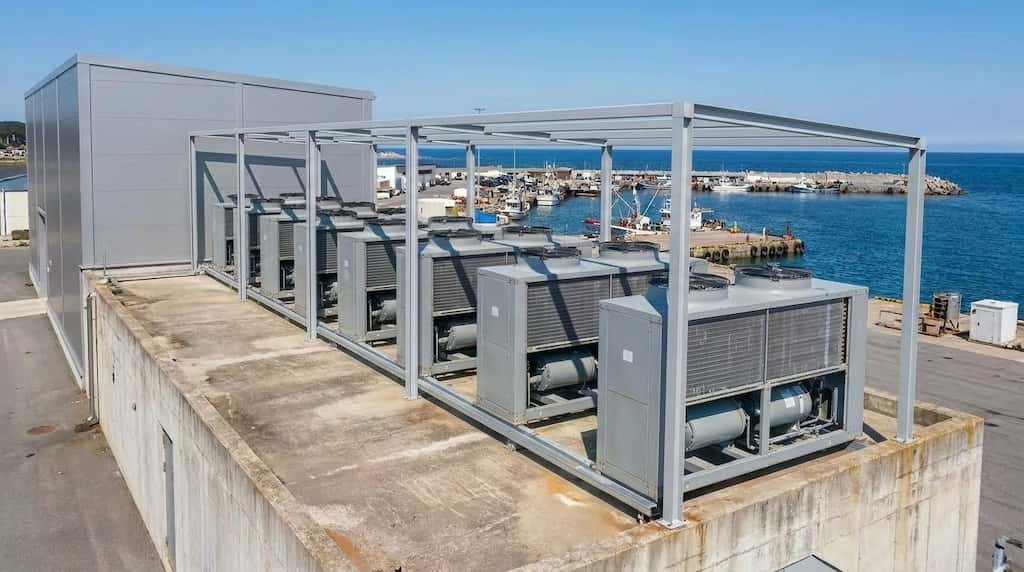
Outdoor condensers should be located away from direct salt spray, strong sea wind, and areas where dirty water or brine may evaporate. If possible, install equipment in a sheltered but well-ventilated position. Protection should never block airflow, because poor heat rejection will reduce efficiency and increase system pressure.
Maximize unit longevity and performance by utilizing anti-corrosion coatings, marine-grade treatments, and specialized fasteners to resist environmental degradation. Additionally, prioritize a strategic design that ensures easy access and optimal clearance for efficient airflow and routine maintenance.
Indoor evaporators also need attention. In seafood cold rooms, moisture levels are high, and products may introduce saltwater into the space. Evaporator coils, fan guards, drain pans, and brackets should be selected for wet and potentially corrosive conditions.
An evaporator with a coated coil, stainless steel drain pan, and corrosion-resistant support hardware can significantly reduce long-term maintenance problems.
4. Design Floors and Drainage Properly
The floor is one of the hardest-working parts of a fishing port cold room. It may need to handle forklifts, pallet jacks, fish boxes, ice, washdown water, brine, and cleaning chemicals.
A coastal or seafood cold room floor should be:
- Suitable for low-temperature conditions
- Resistant to water and salt
- Easy to clean
- Slip-resistant
- Strong enough for traffic and load requirements
- Resistant to cleaning chemicals
- Properly sealed at edges and joints
Drainage should match the actual workflow. Where will fish boxes be washed? Where will ice melt? Where will workers clean the floor? Where will carts move? These questions should be answered before construction begins.
A good drainage plan should include:
- Proper floor slope
- Drain channels positioned outside main traffic conflicts
- Easy-to-clean drain covers
- Water traps or odor prevention
- Anti-pest details
- Drainage materials suitable for salt and washdown conditions
- Measures to prevent freezing in low-temperature areas
5. Control Moisture, Condensation, and Air Leakage
Near the sea, ambient humidity is often high. Every time warm, moist air enters the cold room, the refrigeration system has to remove that heat and moisture. This can lead to condensation, frost, ice buildup, slippery floors, and higher energy costs.
Good insulation and air sealing are essential. Key details include:
- Continuous insulation around walls, ceilings, and floors
- Properly sealed panel joints
- Sealed penetrations for pipes, cables, and drains
- Thermal bridge control around frames and structural supports
- High-quality cold room doors
- Door heaters or frame protection where required
- Air curtains, strip curtains, or antechambers for busy entrances
Coastal Cold Room Construction Checklist
When these details are considered early, a coastal cold room can operate more reliably, protect seafood quality, and reduce long-term repair costs.
- Is the cold room exposed to salt spray, sea wind, or wave splash?
- Are the panel facings and coatings suitable for coastal environments?
- Are the doors, hinges, locks, and screws made from corrosion-resistant materials?
- Do the evaporators and condensers include anti-corrosion protection?
- Is the outdoor unit installed away from direct sea wind where possible?
- Is the floor resistant to low temperatures, abrasion, slipping, and water penetration?
- Are the floor slope, drains, and water traps properly designed?
- Are panel joints, door frames, and pipe or cable penetrations properly sealed?
- Are electrical boxes, cable trays, and lighting fixtures moisture- and corrosion-resistant?
- Is enough space reserved for cleaning, inspection, maintenance, and replacement?
- Is there a regular maintenance and corrosion inspection plan?