

When building a reliable cold storage facility, choosing the right cold room panels is one of the most important decisions you’ll make. These panels determine not only the structural stability of your cold room but also its energy efficiency, durability, and hygiene standards. In this Cold Storage Panel Guide, we’ll explore how different materials and designs compare, what functions they serve, and how to make the right choice for your business.
What Are Cold Storage Panels?
Cold storage panels are insulated sandwich panels designed to maintain specific temperature conditions inside cold storage rooms. They consist of an insulation core (such as PU, PIR, EPS, or rock wool) sandwiched between two metal sheets, usually galvanized or pre-painted steel.
Cold Storage Panel Structure Explained
A typical cold room panel has three main layers:
- External Sheet – Often galvanized steel or stainless steel, coated with food-grade paint for hygiene.
- Insulation Core – Provides thermal resistance and energy efficiency.
- Internal Sheet – Similar to the external sheet, designed for durability and easy cleaning.

Panel Joint Systems:
- Cam-lock System: This system uses built-in cam locks to firmly connect panels together. It provides strong airtight sealing, excellent insulation, and makes installation or dismantling fast and easy.
- Plug-in System: Instead of mechanical locks, the plug-in system relies on tongue-and-groove connections. Panels simply slide into each other, which simplifies installation.
These panels form the walls, ceilings, and sometimes the floors of cold rooms, ensuring thermal insulation, air-tightness, and easy assembly.
Key Tip: If your project requires high performance, frequent use, or long-term operation, go for cam-lock panels. For smaller or budget-driven cold rooms, the plug-in system can still be a practical solution.
Key Functions of Cold Storage Panels:
- Maintain consistent temperature (chilling, freezing, or controlled atmosphere).
- Improve energy efficiency by reducing heat transfer.
- Ensure hygienic and easy-to-clean surfaces.
- Provide modular flexibility for different cold room sizes.
While insulation is the core function, modern cold room panels provide additional features that directly impact performance and long-term savings:
- Energy Efficiency – High R-values reduce operational costs.
- Fire Safety – PIR and rock wool panels provide added protection.
- Modularity & Scalability – Panels can be easily expanded or relocated.
- Moisture & Corrosion Resistance – Vital in humid or coastal environments.
- Hygienic Standards – Anti-bacterial coatings are available for pharmaceutical or cleanroom projects.
Materials Comparison of Cold Room Panels
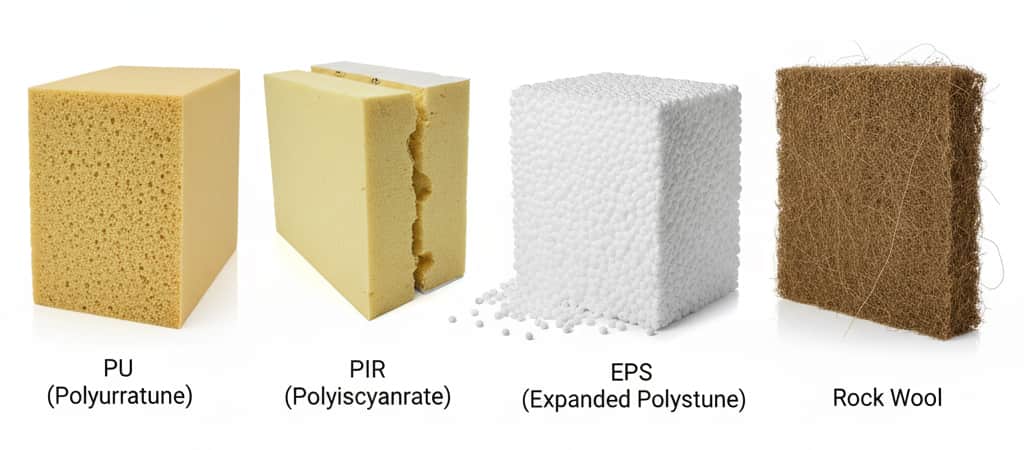
| Material | Thermal Performance | Fire Resistance | Durability | Typical Applications |
|---|---|---|---|---|
| PU (Polyurethane) | Excellent | Moderate | Strong | General cold rooms |
| PIR (Polyisocyanurate) | Excellent | Higher than PU | Very strong | Large cold storage, higher fire-safety standards |
| EPS (Expanded Polystyrene) | Good | Low | Moderate | Budget-friendly projects |
| Rock Wool | Average | Excellent | Heavy, strong | Cold rooms requiring fire safety |
Key takeaway: For most food-related cold rooms, PU and PIR panels are the preferred choice due to their balance of insulation and cost efficiency.
Styles and Surface Finishes of Cold Room Panels
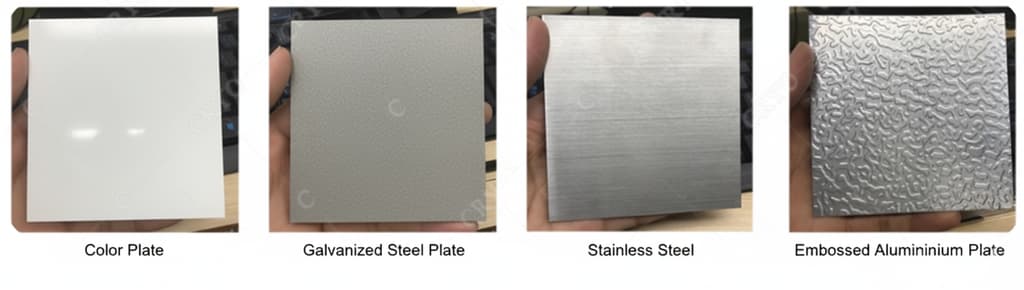
The surface finish of a insulation panel is just as important as the insulation core. The right finish ensures hygiene, durability, and resistance to environmental conditions. Here are the most common options available on the market:
- Color Plate (Pre-painted Steel)
Widely used for general cold storage rooms. It offers an attractive appearance, good corrosion resistance, and a smooth surface that is easy to clean. Color-coated steel is a cost-effective choice for most food storage applications. - Galvanized Steel Plate
Provides excellent strength and rust resistance thanks to its zinc coating. Galvanized panels are often used in environments with moderate humidity or where durability is prioritized. - Stainless Steel
Highly durable and resistant to corrosion, making it ideal for high-hygiene industries such as seafood processing, meat storage, or pharmaceutical cold rooms. Though more expensive, stainless steel panels offer long-term performance and are easy to sanitize. - Embossed Aluminum Plate
Lightweight yet durable, embossed aluminum panels resist scratches and impacts. The textured surface is especially useful in facilities where trolleys or heavy goods may cause wear and tear, such as meat and fish warehouses. - Salinization Plate (PVC-Coated Steel)
Features a special plastic or PVC coating that enhances anti-corrosion properties. Particularly suited for environments with high humidity or salt exposure, such as coastal cold storage facilities.
Tip: When selecting a finish, consider both the operational environment and maintenance requirements. Some suppliers also offer custom color finishes to match warehouse or retail branding.
What Customers Care About When Choosing Cold Storage Panels
Based on market research, customers typically evaluate panels with the following factors in mind:
- Price vs. Long-term ROI: Is the investment worth the energy savings?
- Compliance with Local Standards: HACCP, ISO, and food-grade certifications.
- Ease of Installation: Panels with cam-locks reduce construction time.
- After-sales Service & Warranty: Contractors and end-users often prefer suppliers with strong technical support.
- Customization Options: Thickness (50mm to 200mm), panel lengths, and finish choices.
Frequently Asked Questions (FAQ)
Q1: What thickness of cold room panels should I choose?
- Fruit & Vegetable Preservation Rooms (0°C and above): 50mm ~ 75mm thickness.
- Chilled Food Storage (-5°C to 0°C): 75mm ~ 100mm thickness.
- Frozen Food Storage (-15°C to -10°C): 100mm ~ 150mm thickness.
- Ultra-Low Temperature Cold Rooms (below -30°C): 150mm ~ 200mm thickness.
Q2: Are insulated sandwich panels suitable for outdoor cold rooms?
A: Yes, with the right protective coating, insulated sandwich panels can be used outdoors without compromising durability.
Q3: Which is better: PU or PIR cold storage panels?
A: PIR panels provide better fire resistance, while PU panels are slightly cheaper but still highly efficient.
Q4: How long do cold storage panels last?
A: With proper maintenance, panels can last 10–20 years depending on the environment.
Conclusion
Cold storage panels are not a one-size-fits-all product. The right choice depends on your application, budget, and regulatory requirements. This Cold Storage Panel Guide shows that PU and PIR panels are ideal for most commercial cold storage needs, while EPS offers cost efficiency and rock wool ensures top-level fire safety. By understanding structure, material, style, and functional differences, businesses can make smarter investments that improve performance and reduce costs in the long run.