


Chocolate is a sensitive product. It reacts quickly to heat and humidity. Chocolate factories can produce many types of chocolate products. They produce dark chocolate, milk chocolate, and white chocolate. Many factories also make filled chocolate, coated nuts, chocolate bars, chocolate chips, and seasonal gift products. Some factories focus on premium handmade chocolate. Others run large industrial production lines.
No matter the product type, every factory needs stable temperature control after molding and packaging. This is why a chocolate processing cold room plays an important role in chocolate production storage.

Why Temperature Control Is Critical in Chocolate Production
Chocolate is very sensitive to temperature. Cocoa butter melts at around 30–34°C. If the room is too warm, the chocolate becomes soft. If the temperature changes too often, the surface can turn white. This problem is called fat bloom or sugar bloom.
During production, chocolate goes through melting, tempering, molding, cooling, and packaging. After the chocolate cooling system finishes rapid cooling, the product still needs a stable environment. For safe chocolate production storage, the temperature must stay between 12–18°C. Humidity should stay below 50% RH. Stable control protects taste, texture, and appearance.
Chocolate Production Process and Cooling Stages
- Mixing
Cocoa mass, sugar, milk powder, and cocoa butter are mixed together. The ingredients must be evenly blended. The proportions of various ingredients and the mixing process determine the final flavor, balancing sweetness, bitterness, and smoothness. - Refining
The mixture passes through refining machines. The goal is to reduce particle size. Fine particles improve texture and mouthfeel. - Conching
Conching removes unwanted moisture and improves flavor. This process can take several hours. Heat is applied during this stage. - Tempering
Tempering controls the crystal structure of cocoa butter. This step gives chocolate a glossy finish and a firm snap. - Molding
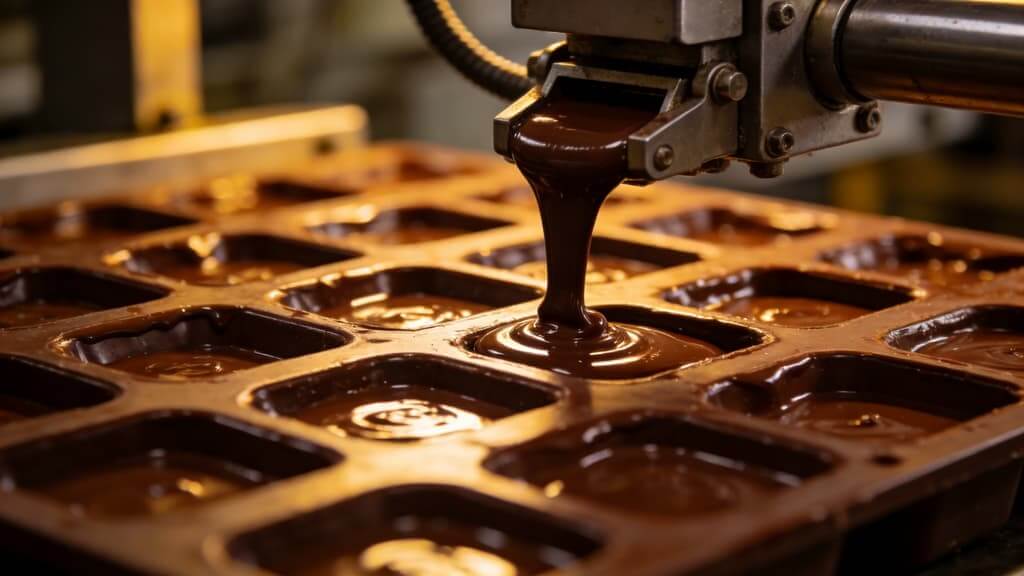
The tempered chocolate is poured into molds. It can form bars, blocks, or filled products. - Rapid Cooling
The products enter a cooling tunnel. The chocolate cooling system quickly lowers the temperature. This helps the chocolate solidify. - Packaging
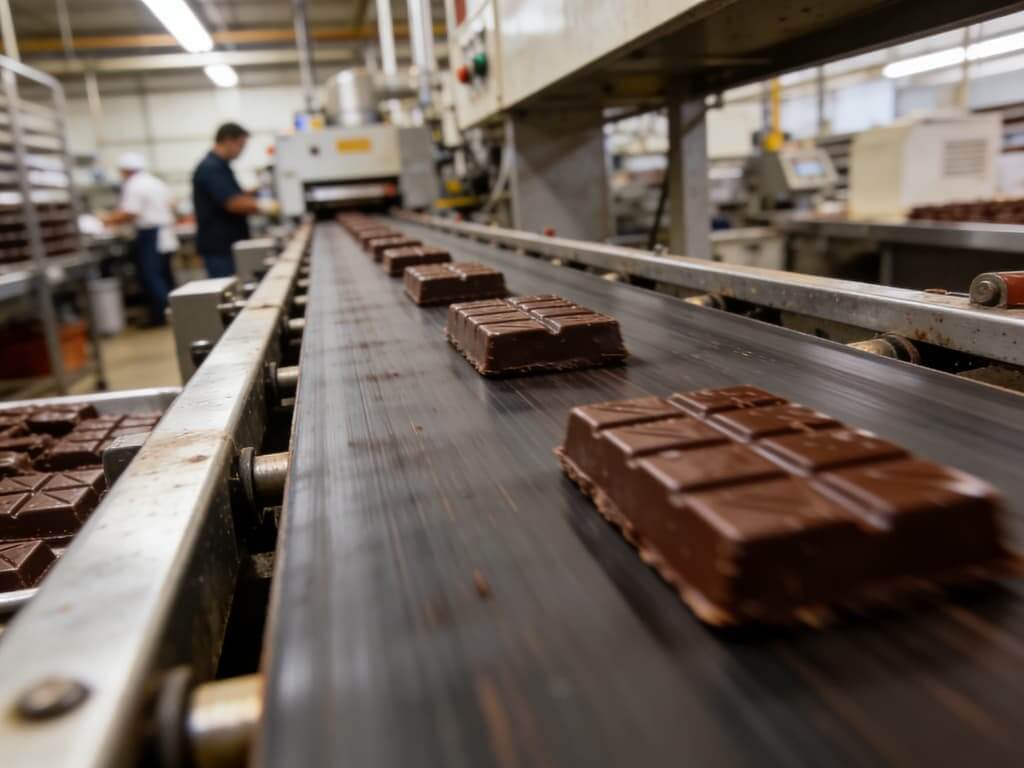
After cooling, the products are removed from molds and packed. At this point, the chocolate must not be exposed to heat or high humidity. - Production Storage
Before shipping or distribution, the products move into chocolate production storage.
Ideal Temperature & Humidity for Chocolate Factory Cold Rooms
Chocolate is not like frozen food. It does not need very low temperatures. It needs stable conditions. Temperature and humidity must stay within a safe range.
- The ideal temperature is between 12°C and 18°
If the temperature is too high, chocolate becomes soft and may lose shape. If it is too low, condensation can form when products move outside. Sudden temperature changes are also dangerous. - Humidity should stay below 50% RH.
High humidity can cause sugar bloom. This happens when moisture dissolves sugar on the surface. When the water dries, white marks appear. A chocolate processing room includes humidity control to prevent this problem. - Airflow must be gentle and balanced.
Strong wind from a normal chocolate cooling system can create surface cracks or uneven cooling. A well-designed chocolate factory setup uses low-speed fans and even air distribution.
How to Design a Chocolate Processing Cold Room
Designing a chocolate cold room requires careful planning. The system must support product quality and daily factory operations. A standard cold room is not enough. A professional chocolate factory refrigeration solution must be designed for chocolate only.
- Most factories need 12–18° Humidity should stay below 50% RH.
- Airflow must be soft and even. Strong air can damage the chocolate surface.
- A proper chocolate cooling inside the cold room should use low-speed fans.
- Air should circulate evenly across shelves and pallets.
- Large factories often need different storage zones, such as finished product storage, temporary holding before packaging, and export preparation areas.
- Each zone may require slightly different temperature or handling conditions.
- Insulation thickness depends on climate. 75mm panels for mild climates. 100mm or more for hot regions.
- Reliable monitoring supports long-term chocolate production storage and protects valuable products.
Conclusion
A well-designed chocolate cold room is essential for stable and high-quality chocolate production. It supports the chocolate cooling after molding and ensures safe chocolate production storage before distribution. With the right chocolate factory refrigeration solution, factories can reduce bloom, protect texture, and improve product consistency.
If you are planning to upgrade your chocolate cold room or expand your chocolate production storage capacity, investing in a professional chocolate processing cold room is a smart long-term decision. Contact us to get a customized chocolate factory refrigeration solution designed for your production needs.