


Ice cream is a frozen dairy or non-dairy dessert made from ingredients such as milk, cream, sugar, stabilizers, flavorings, and sometimes fruit, chocolate, or nuts. It is one of the most loved frozen desserts in the world. Sweet, refreshing, and full of variety, ice cream is enjoyed by people of all ages and is especially popular during the hot summer season. For ice cream brands, shops, and distributors, this strong demand also means higher requirements for product quality and stable storage.

Common Types of Ice Cream and Frozen Desserts
There are many types of ice cream and frozen desserts on the market, and different products may have different storage needs.
- Hard ice cream is the most common type and is usually stored and transported in a fully frozen state.
- Soft ice cream is smoother and lighter, and is often served fresh in shops or restaurants, while its premix or ingredients still require cold storage.
- Gelato is known for its dense and creamy texture, and it is often more sensitive to temperature changes.
- In addition to these, there are also many other frozen desserts, such as ice pops, sorbet, frozen yogurt, and plant-based ice cream.
As product types continue to grow, proper cold storage becomes even more important for maintaining quality and supporting different business needs.
What Temperature Should Ice Cream Be Stored At?
Different types of ice cream and frozen desserts may require slightly different storage temperatures, depending on their texture, ingredients, and stage in the supply chain.
For most finished products, the ideal ice cream storage temperature is -18°C or below. This is the standard temperature commonly used in an ice cream cold room, because it helps keep ice cream firm, smooth, and stable during storage and distribution.
In some cases, the temperature may need to be even lower during production. For example, newly made ice cream often goes through a hardening stage at around -25°C to -35°C so it can freeze quickly and maintain a better texture.
Products like gelato and soft serve may have different serving characteristics, but when they are stored as products or ingredients, they still require proper low-temperature control.
A stable cold room for ice cream is essential, because frequent temperature changes can cause melting and refreezing, which may damage texture, appearance, and overall product quality.
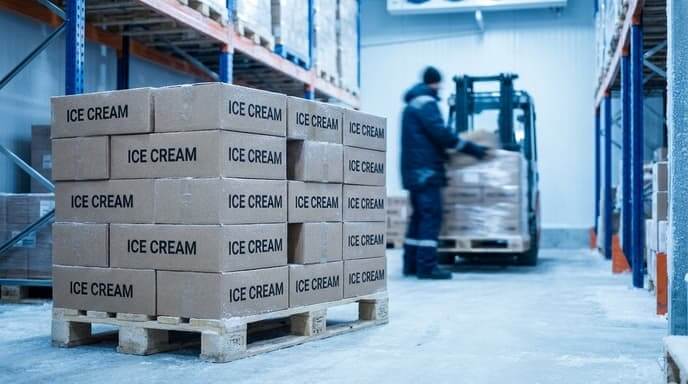
Ice Cream Cold Room for Production Factories
For ice cream manufacturers, the right ice cream cold room solution usually includes more than just one storage room. A complete factory solution often combines different temperature zones for different stages of production.
- A cold room for raw materials can be used to store dairy ingredients, chocolate, fruit preparations, or other temperature-sensitive materials before processing.
- After production, a hardening room is usually needed to bring the temperature down quickly, often at -25°C to -35°C, so the ice cream can freeze fast and maintain a smooth texture.
- Once hardened, the products are transferred to an ice cream freezer room at -18°C or below for holding and dispatch.
This type of ice cream factory cold room solution helps manufacturers organize production more efficiently and protect product quality at every stage. For factories with large output, the cold room system should also be designed with enough storage capacity, stable temperature control, reliable refrigeration units, and smooth loading flow between production and shipping areas.
Ice Cream Cold Room Solution for Distributors and Cold Storage Warehouses
For distributors, wholesalers, and cold chain operators, an effective ice cream cold room solution is mainly focused on finished product storage, inventory turnover, and reliable frozen distribution. Unlike production factories, these businesses do need a well-organized ice cream cold storage room that can keep products at -18°C or below throughout daily operations.
Since ice cream products are often stored in larger volumes and moved in and out frequently, the cold room for ice cream should be designed for stable temperature control, easy product access, and efficient loading and unloading.
- Separating areas for fast‑moving products and bulk stock can help improve picking efficiency and reduce unnecessary door opening time.
- To reduce cold air loss caused by frequent door opening, businesses can use fast‑opening doors, strip curtains, or an anteroom design between the loading area and the main cold room.
- Clear aisle design and organized shelving or racking support smoother loading, unloading, and stock rotation.
- During busy periods, a more efficient room layout and smoother traffic flow allow products to move in and out faster without compromising storage conditions.
- Sufficient storage space enables distributors to handle larger inventories and maintain a more stable cold chain during demand peaks.
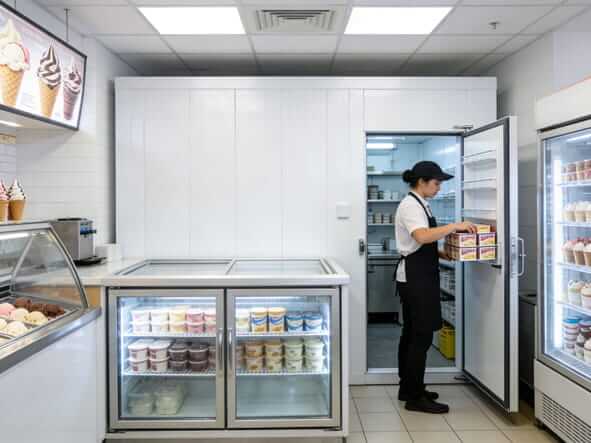
Small Ice Cream Cold Room for Retail Shops
For ice cream shops, gelato stores, dessert chains, cafés, and convenience stores, a practical small ice cream cold room should match limited space and fast daily operations. Retail businesses usually need a more compact cold room for ice cream that can fit into the back-of-house area while still keeping products at a stable frozen temperature.
- Compact room size: suitable for small back rooms or limited shop space without affecting normal workflow.
- Stable storage temperature: keeps product quality consistent and reduces the risk of softening or refreezing.
- Fast and simple installation: especially useful for new shop openings, chain store expansion, or store renovation projects.
- Flexible modular design: easier to adapt to different store layouts and future business changes.
- Clean and easy-to-maintain interior: supports better hygiene and more convenient daily cleaning.

- Simple Installation
- Expandable Design
- Easy Cleaning
- Lowers Maintenance Costs
Conclusion
Different types of ice cream businesses need different cold room solutions. Production factories often require multiple temperature zones for raw materials, hardening, and finished product storage. Distributors and cold storage warehouses need reliable frozen storage that supports smooth turnover and stable cold chain operations. Retail shops and dessert stores usually need compact and practical cold rooms that fit limited space and daily use. Choosing the right solution based on your product type, storage needs, and operating scenario can help your business run more smoothly and reliably.