


Proper post-harvest management — sorting, handling, storing, packing and transporting — keeps onions fresh, nutritious and marketable. Onion cold storage is also very important. To ensure this is the case, you will need to monitor certain factors inside your onion storage facility.
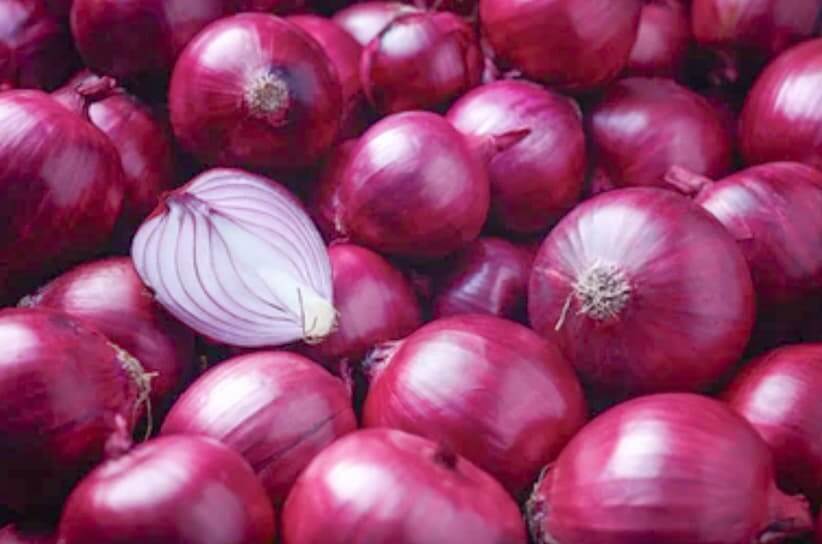
Benefits of a Proper Onion Storage Facility
Storage losses can be large when onions are handled poorly. Typical losses include: sprouting, rotting, loss and shrinkage.Poor post-harvest handling can quickly reduce onion quality and market value.
In contrast, a well-designed onion storage facility offers multiple long-term benefits for growers, distributors, and traders.Proper onion cold storage helps extend shelf life by slowing down respiration and moisture loss.
Cold storage of onion significantly improves food safety by limiting microbial growth and reducing the risk of rot and decay. Another major benefit is year-round availability.
Ideal Storage Conditions for Onions
- Temperature: generally 0–4 °C (common practical targets 0–2 °C or 2–3 °C depending on variety). Avoid freezing (temperatures below −1 to −2 °C can cause damage).
- Relative humidity (RH): 60–70% is commonly recommended. (Note: some market/variety preferences or cosmetic concerns may lead to slightly lower targets like 50–60% to reduce peel discoloration.)
- Ventilation: continuous, even airflow to remove field heat and moisture. However, over-ventilating your onion storage facility can result in unnecessary profit loss due to excessive evaporation.
- Light: store in the dark (light can encourage sprouting and flavor changes).
- Separation: keep onions away from ethylene-producing produce and strong-smelling items.
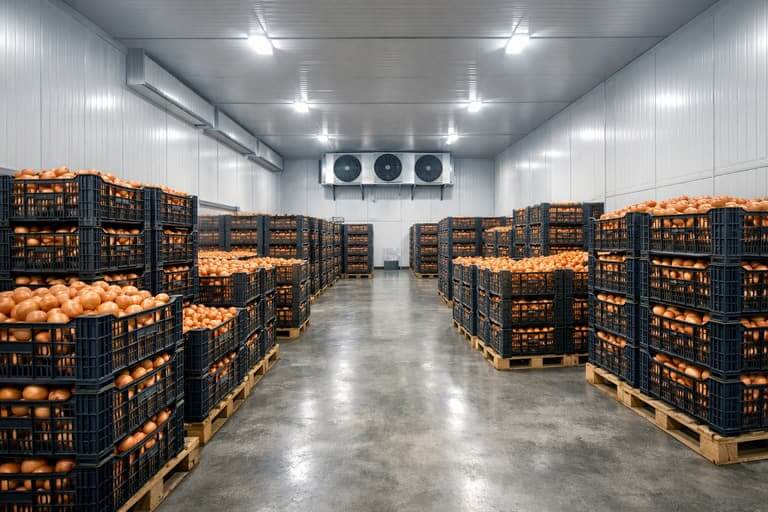
Storage Systems —Options and Pros/Cons
Cold Storage (Refrigerated)
Cold storage is the most effective solution for long-term onion storage and offers the lowest risk of quality loss. Stable temperatures between 0–4 °C combined with a relative humidity of 60–70% help slow sprouting, reduce decay, and maintain overall bulb quality.
To achieve consistent results, an onion storage facility must be equipped with high-quality insulation, reliable refrigeration systems, and a well-designed ventilation layout. Proper airflow ensures even temperature distribution and prevents moisture buildup inside the storage space.

Our Onion Cold Storage Solutions are designed to extend shelf life, reduce spoilage, and maintain optimal quality, giving growers, distributors, and retailers a competitive edge.
Ventilated (Ambient) Storage
It uses natural or forced airflow to remove heat and moisture from the onions. Common designs include bottom-ventilated single-row structures and bottom-and-side ventilated two-row structures, which help improve airflow around the bulbs.
Ventilated storage is suitable in areas where cold storage is unavailable or electricity costs are high. This method better for short-term storage rather than long-term preservation.
Modular & Mobile Units
Portable refrigerated units give flexibility for seasonal demand and can reduce transport and handling losses by moving cold storage closer to the crop or market.
Packing and Container Guidelines
Use containers that allow good air circulation: ventilated crates, mesh bags, or open boxes.
Avoid tight sacks for long-term storage — air movement through sacks is poor; sacks are usually good only for short-term (≈1 month) storage.
For bulk storage, keep onions off the floor using pallets or shelving to allow airflow and reduce moisture contact.
FAQs About Onion Storage Facility
What equipment is used in onion cold storage?
An onion cold storage facility usually includes refrigeration units, insulation panels, ventilation fans, temperature controllers, and humidity sensors. Some facilities also use automated control systems and remote monitoring to keep conditions stable at all times.
What temperature is best for onion storage?
The best temperature for onion cold storage is usually between 0 and 4°C. Temperatures below −1 to −2°C should be avoided because they can cause freezing damage.
What humidity level is ideal for storing onions?
The ideal humidity level for onion storage is generally between 60% and 70%. In some cases, slightly lower humidity (50–60%) is used to reduce peel discoloration.
How should onions be prepared before storage?
Onions should be well dried and cured. The outer skin and neck must be dry before putting them into storage.
Where should onions be placed inside the storage room?
Onions should be placed on pallets or shelves with enough space for air to move around them.
Why should onions be kept away from other produce?
Some fruits release ethylene gas, which can speed up onion aging and sprouting. Onions can also absorb strong smells from nearby produce, which affects their flavor and quality.