


In the global effort to control infectious diseases, vaccines stand as one of humanity’s most powerful tools. The recent outbreaks of COVID-19 and the Nipah virus highlight the urgent need for effective vaccine storage and transportation.
Vaccines are highly sensitive biological products, and even small temperature deviations can permanently reduce their effectiveness. For this reason, professional cold storage infrastructure plays a critical role throughout the global immunization system.
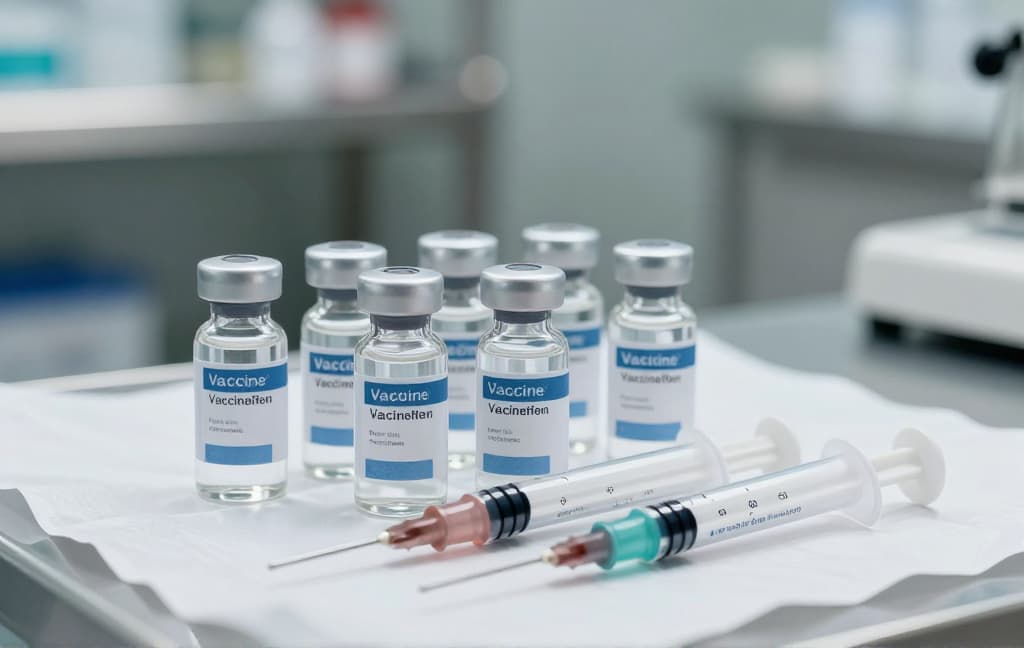
Types of Vaccines and Their Storage Needs
Vaccines vary widely in their formulation, delivery methods, and most importantly, their temperature requirements. Misunderstanding these nuances can lead to accidental inactivation—making proper training and labeling essential in every vaccine cold room.
- Live Attenuated Vaccines (e.g., MMR, Varicella): Sensitive to heat and light; require strict 2–8°C vaccine storage temperature. Some formulations may need reconstitution before use.
- Inactivated Vaccines (e.g., Hepatitis A, Rabies): More stable than live vaccines but still require consistent refrigeration within the vaccine storage temperature range.
- Subunit/Recombinant Vaccines (e.g., HPV, Hepatitis B): Generally robust but must avoid freezing; stored at 2–8°C.
- mRNA Vaccines (e.g., COVID-19 vaccines): Require ultra low temperature vaccine freezer conditions (e.g., -70°C ± 10°C) for long-term storage, then transferred to 2–8°C for short-term use.
- Viral Vector Vaccines (e.g., Ebola, some COVID-19 vaccines): Often stored at -70°C or in standard vaccine storage temperature after thawing.
| Vaccine | Type | Storage Temperature |
|---|---|---|
| DTP,MMR,Polio | Routine Childhood Vaccines | 2–8°C |
| Influenza Vaccine | Inactivated or Live | 2–8°C |
| Pfizer-BioNTech,Moderna | mRNA Vaccines(Long-term) | -90°C to-60°C |
| Pfizer-BioNTech,Moderna | mRNA Vaccines(Short-term) | 2–8°C(up to 31 days) |
| Oral Polio Vaccine | Live,Attenuated | -20°C or lower |
What Equipment Is Used for Vaccine Storage?
- Vaccine cold rooms
They are widely used in hospitals, vaccination centers, central warehouses, and government stockpiles. - Pharmaceutical refrigerators and freezers
These units are typically used in clinics and smaller healthcare facilities for short-term or point-of-use medical cold storage. - Ultra low temperature vaccine freezers
Ultra low temperature vaccine freezers are designed to maintain temperatures as low as –70°C or below, making them essential for specialized vaccine programs and research facilities. - Vaccine cold boxes
Cold boxes are insulated containers used to store vaccines for limited periods without direct power supply. They are commonly applied during outreach programs, emergency responses, and short-distance transportation where fixed refrigeration is unavailable. - Vaccine transport carriers
Vaccine transport carriers are lightweight, portable containers designed specifically for vaccine distribution. They are used for last-mile delivery, mobile immunization teams, and rural healthcare services.
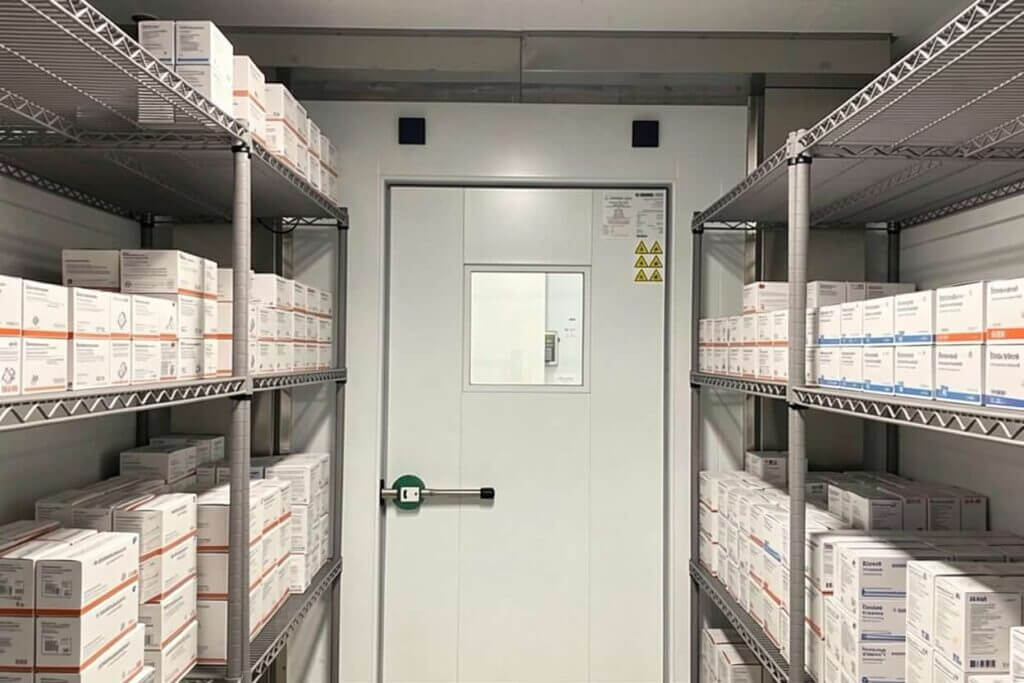
Vaccine Cold Storage Requirements Across Different Application Scenarios
Vaccine storage needs vary significantly depending on where vaccines are stored and how they are distributed.
Hospitals typically require high-capacity vaccine cold room systems to support routine immunization programs, emergency stockpiles, and specialty vaccines with different vaccine storage temperature requirements. These facilities demand uninterrupted operation, strict access control, and full traceability to meet regulatory audits and clinical safety standards within medical cold storage environments.
Vaccination centers and clinics focus on reliability and rapid access, often combining centralized vaccine cold chain storage with smaller on-site storage systems to support daily immunization activities.
In contrast, vaccine warehouses and distribution centers prioritize scalability, energy efficiency, and logistics integration, as they handle large vaccine volumes moving through multiple transport stages.
For remote or resource-limited areas, solutions may include modular or containerized vaccine cold room systems, solar-assisted refrigeration, and portable cold chain equipment to ensure vaccines remain protected even where power infrastructure is unstable or unavailable.
Additionally, companies engaged in vaccine research, development, and production need advanced storage solutions for raw materials, bulk vaccines, and finished products.
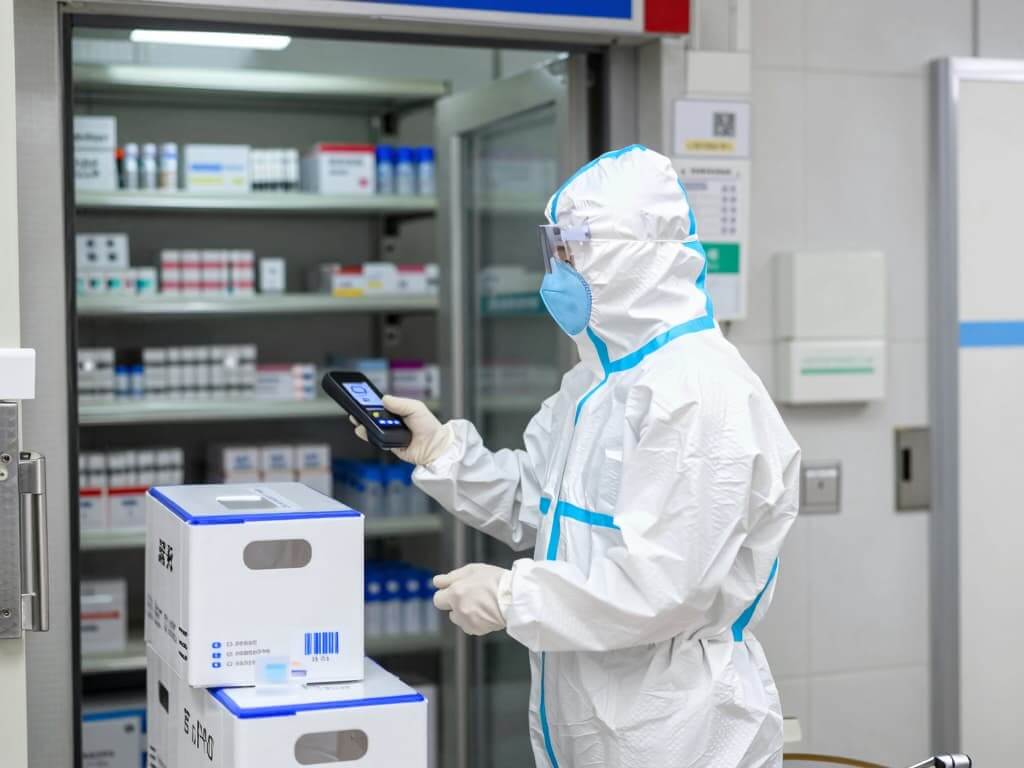
Why Vaccines Require a Vaccine Cold Room, Not Ordinary Refrigeration
Most vaccines require a stable vaccine storage temperature of +2°C to +8°C, while some require frozen or ultra-low-temperature environments. Ordinary household or commercial refrigerators are not designed to comply with these medical cold chain standards.
WHO and UNICEF cold chain guidelines require vaccine storage facilities to provide uniform temperature distribution, calibrated temperature monitoring devices, and documented temperature records. A professional vaccine cold room is engineered to meet these requirements through forced-air circulation, validated refrigeration systems, and 24/7 monitoring with alarm and data-logging functions.
The CDC further emphasizes the need for temperature excursion prevention and rapid recovery after power failures or door openings. Professional medical cold storage solutions incorporate redundancy, backup power options, and alarm notifications that allow immediate corrective action.
Without these safeguards, vaccines stored in ordinary refrigeration face a high risk of unnoticed temperature excursions, potentially leading to reduced potency, vaccine wastage, and non-compliance with regulatory and immunization program requirements.
FAQ: Vaccine Cold Chain Storage
Can’t I just use a regular fridge for vaccines?
Regular fridges aren’t designed to keep vaccines at a steady temperature. They can have hot spots, or the temperature may fluctuate too much.
What happens if the vaccine temperature goes out of range?
If the temperature goes too high or too low, the vaccine might not work properly. This could lead to wasted vaccines and the need for costly replacements, affecting public health efforts.
How can I monitor the temperature of my vaccine storage?
Professional medical cold storage systems have built-in temperature monitors, alarms, and data loggers.
How are vaccines stored and transported?
In hospitals and vaccination centers, vaccines are typically stored in medical-grade refrigerators and cold rooms. For transportation, specialized vehicles with temperature-controlled systems are used. In remote areas, portable refrigeration units and solar-powered coolers are common.