

In modern craft breweries, beer quality doesn’t depend only on recipes and brewing skills—it depends on how well the beer system works as a whole. Far more than a storage space, a walk-in beer cooler plays a critical role in temperature stability, keg management, and the final stage of the cold chain beer process.
From post-fermentation holding to taproom service and distribution prep, breweries rely on consistent, controlled cooling to protect flavor, carbonation, and freshness. When a walk-in cooler is poorly sized, poorly located, or disconnected from the beer system design, even well-made craft beer can suffer.
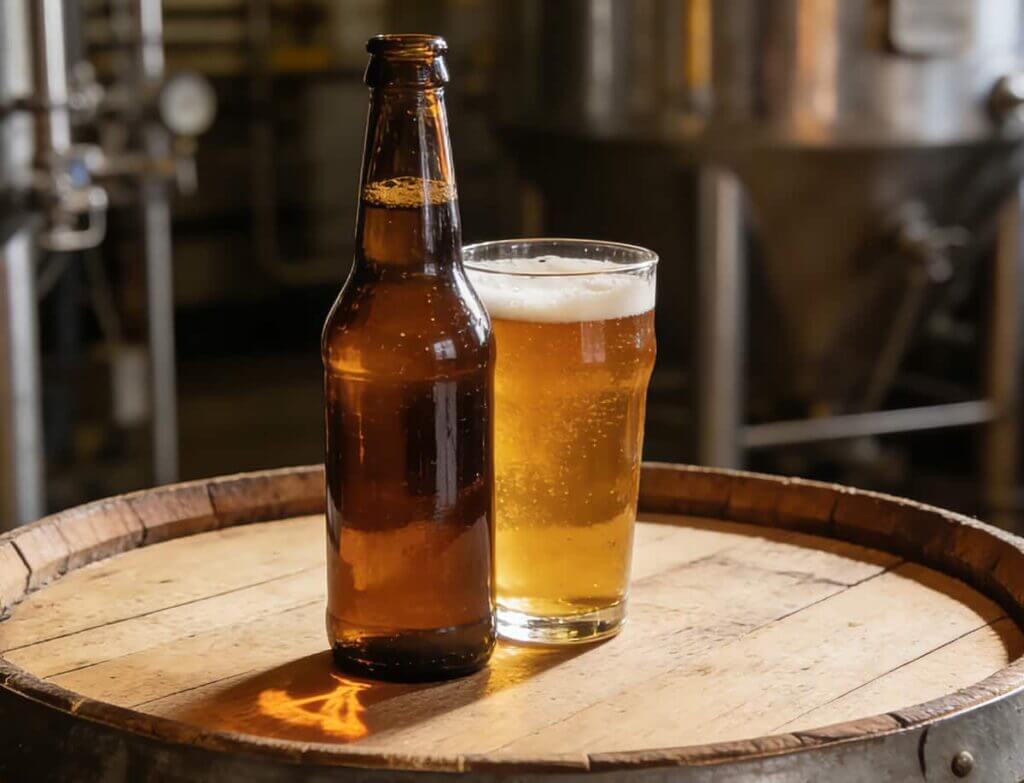
What Is a Complete Beer System in Craft Beer Bars and Breweries
A complete beer system typically includes fermentation and brite tanks, kegging equipment, keg storage, draft lines, pressure control components, and temperature management.
For breweries, the walk-in cooler is not simply cold storage; it is the bridge between production and service or shipment. After beer leaves the tank, it must remain at a stable temperature to preserve carbonation levels, aroma, and mouthfeel. Any fluctuation—especially during keg storage—can disrupt the balance achieved during fermentation and conditioning.
Walk-in beer coolers act as a controlled environment for finished kegs, a buffer zone between brewing and taproom operations, and, in many cases, the physical starting point of the draft beer system.
How Walk-In Beer Coolers Protect Craft Beer Quality
For craft breweries, protecting beer quality after production is just as important as the brewing process itself. Once beer is kegged, temperature control becomes the dominant factor influencing flavor stability, carbonation, and shelf life.
Stable, uniform temperature inside the cooler helps preserve dissolved CO₂ levels. When kegs are exposed to fluctuating temperatures, CO₂ can come out of solution, leading to over-foaming, inconsistent pours, and a loss of mouthfeel.
A walk-in cooler also protects delicate aroma compounds that define many craft beer styles, especially IPAs, pale ales, and dry-hopped beers. Excessive warmth accelerates oxidation and hop aroma degradation, reducing freshness long before the beer reaches the customer.
From an operational standpoint, walk-in beer coolers allow breweries to standardize serving conditions across taproom taps, mobile draft setups, and distribution channels. When finished kegs are kept in one controlled environment, breweries get more consistent pours, fewer customer complaints, and greater confidence in beer quality.
Installing and Sizing Your Walk-In Beer Cooler
Designing and installing a walk-in beer cooler for a craft brewery requires careful planning. Several key factors determine the ideal size, layout, and functionality of your cooler:
-
Amount of Beer Sold
Estimate your peak production and taproom demand. The cooler must store enough kegs to cover daily sales without constant replenishment. -
Number of Variants Stocked
Craft breweries often offer multiple beer styles. Each variant may require separate storage zones to prevent cross-contamination and maintain quality. -
Footprint of the Space
Measure the available area, including ceiling height and access routes. The cooler must fit the space while allowing room for staff and equipment movement. -
Size of Beer Keg Barrels
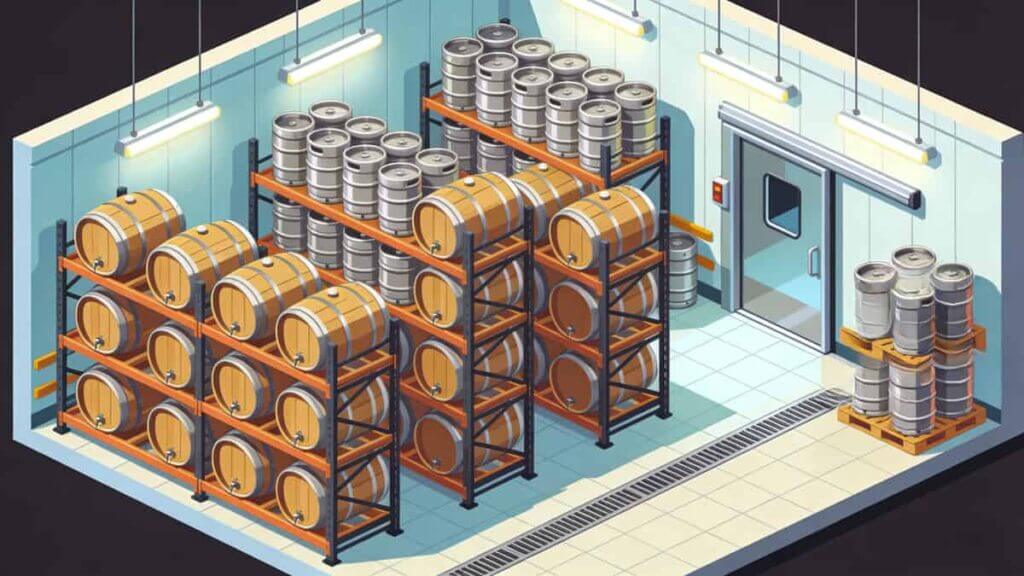
Different keg sizes (half-barrel, quarter-barrel, sixth-barrel) affect storage layout. Shelving and floor space should accommodate the range of keg types you use. -
Type of Shelving
Adjustable shelving can help maximize storage efficiency and allow for flexible arrangements of kegs and other products. -
Carbonation and Temperature Requirements
Different beer styles may require slightly different storage temperatures to maintain carbonation and flavor. The cooler should maintain stable temperatures across all zones. -
Floor Materials
Floors must support heavy kegs, allow smooth movement of pallet jacks, and include proper drainage to prevent spills or water buildup.
Matching Walk-In Beer Coolers with Different Beer Systems
Not all craft breweries use the same beer system, and a walk-in beer cooler should be designed to match how beer is actually stored, served, and moved within the brewery. When the cooler layout and capacity align with the beer system, daily operations become more efficient and beer quality remains consistent.
For breweries with an on-site taproom, the walk-in beer cooler often functions as both keg storage and the starting point of the draft system. In these setups, placing the cooler directly behind the tap wall or adjacent to the serving area helps maintain stable beer temperature all the way to the faucet. Shorter draft lines and consistent cooling reduce foaming and pressure adjustments.
In production-focused breweries, the walk-in beer cooler is more closely tied to packaging and distribution. Kegs may enter the cooler immediately after filling and remain there until shipment. In this case, cooler size, pallet access, and door configuration are critical. The cooler must handle peak production volumes without forcing kegs into temporary warm storage.
Some breweries operate mixed systems, supporting both taproom service and wholesale distribution. These operations often benefit from zoning within the walk-in beer cooler—separating ready-to-serve kegs from distribution stock. Designing the cooler around real beer flow, rather than treating it as generic cold storage, ensures the beer system performs reliably as the brewery grows.
Cold Chain Beer: Common Failure Points in Breweries
The problems usually come from process gaps rather than equipment failure. Below are the most common cold chain beer breakdown points seen in brewery operations:
-
Warm staging after kegging
Finished kegs are sometimes staged in ambient areas before entering a walk-in beer cooler. -
Undersized or overloaded walk-in coolers
When a walk-in beer cooler is too small, kegs are frequently moved in and out to make space. -
Inconsistent internal cooler temperatures
Poor air circulation or uneven loading can create warm zones inside the cooler. -
Separation between storage and draft system
This break in the cold chain often leads to pressure imbalance and inconsistent pours. -
Temporary storage before distribution
Kegs prepared for delivery are sometimes held outside controlled cold storage.
Fixing an improper installation will cost significantly more than doing it correctly from the start. By thoughtfully evaluating these factors, breweries can ensure their walk-in beer cooler enhances beer quality, streamlines operations, and accommodates future growth.
Ready to Upgrade Your Brewery’s Beer System?

Its flexible modular design supports high-volume keg storage, pallet access, and future expansion as brewery production scales.