


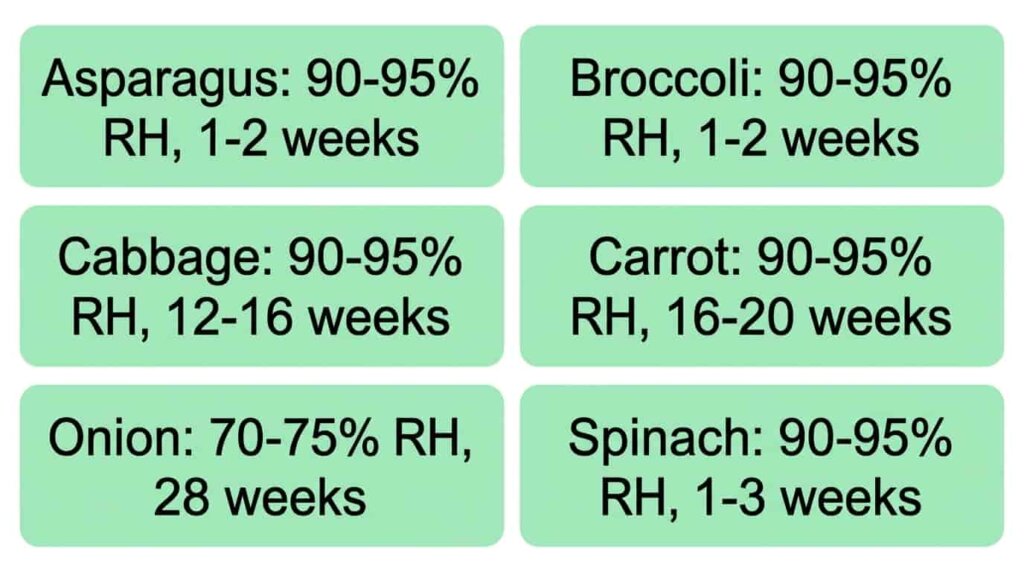
1. Maintain Optimal Temperature & Humidity
- Store leafy greens at 0-4°C (32-39°F) to slow metabolic processes and preserve freshness; temperatures above this range accelerate respiration, causing rapid yellowing, wilting, and nutrient loss.
- Maintain 90-95% relative humidity for leafy greens to prevent moisture loss and maintain crisp texture; lower humidity leads to visible wilting and weight reduction, significantly shortening shelf life and market value.
- Keep root vegetables like carrots and potatoes at 4-10°C (39-50°F) to maintain quality while avoiding cold-induced sweetening or chilling injury; storing below this range can alter flavor profiles and cause undesirable texture changes.
- Maintain 80-85% humidity for root vegetables to balance moisture retention with adequate ventilation; excessively dry conditions cause shriveling and rubbery texture, while overly humid environments encourage mold growth and premature sprouting.
2. Proper Loading & Airflow Management
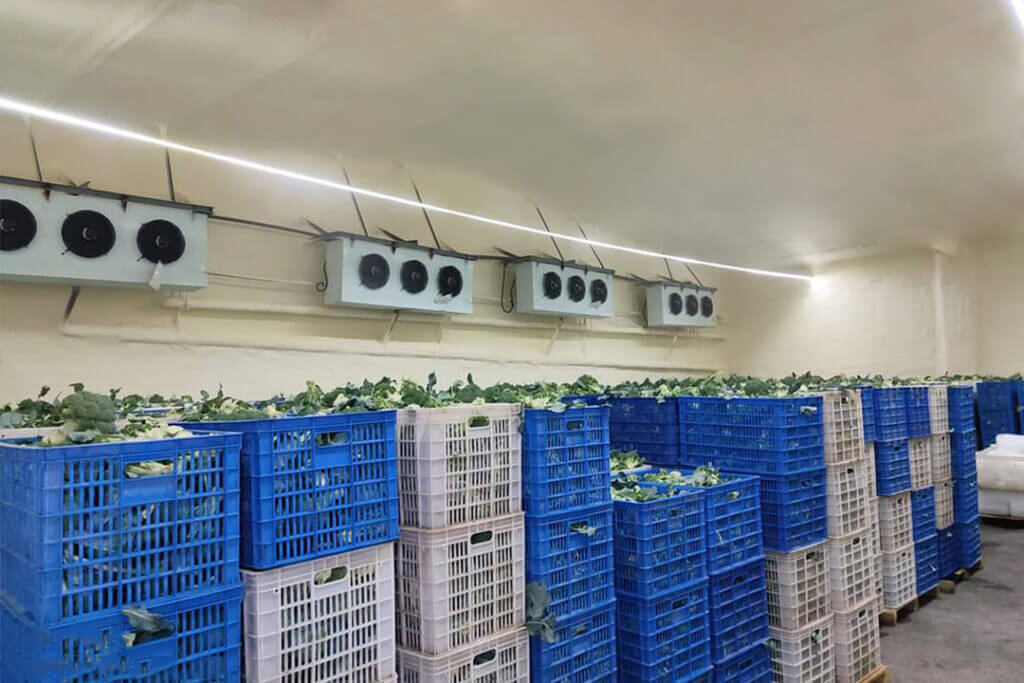
Avoid overcrowding your cold room by leaving adequate space between vegetable bins and trays to enable proper air circulation; restricted airflow creates warm pockets that accelerate spoilage and cause uneven cooling across your inventory.
Use perforated storage bins to allow air to flow freely around individual produce items, ensuring consistent temperature exposure; solid containers trap heat and moisture around vegetables, promoting microbial growth and premature decay.
Design airflow so cold air enters from the bottom and warm air exits from the top to leverage natural convection and improve cooling efficiency; improper airflow direction causes temperature stratification, leaving some produce under-cooled while others risk chilling injury.
Maintain balanced ventilation throughout the cold room to ensure even temperature distribution and reduce condensation buildup.
3. Ethylene Gas Handling
Ethylene is a naturally occurring gas that accelerates the ripening process of fruits and vegetables. Some organic vegetables, like leafy greens, are sensitive to ethylene exposure, causing premature wilting or spoilage. Store ethylene-producing fruits such as apples and tomatoes separately from sensitive vegetables like lettuce, spinach, and root crops.
4. Cleaning & Sanitation Protocols
- Store leafy greens at 0-4°C (32-39°F) to slow metabolic processes and preserve freshness; temperatures above this range accelerate respiration, causing rapid yellowing, wilting, and nutrient loss.
- Maintain 90-95% relative humidity for leafy greens to prevent moisture loss and maintain crisp texture; lower humidity leads to visible wilting and weight reduction, significantly shortening shelf life and market value.
- Keep root vegetables like carrots and potatoes at 4-10°C (39-50°F) to maintain quality while avoiding cold-induced sweetening or chilling injury; storing below this range can alter flavor profiles and cause undesirable texture changes.
- Maintain 80-85% humidity for root vegetables to balance moisture retention with adequate ventilation; excessively dry conditions cause shriveling and rubbery texture, while overly humid environments encourage mold growth and premature sprouting.
5. Monitoring Systems & Sensors
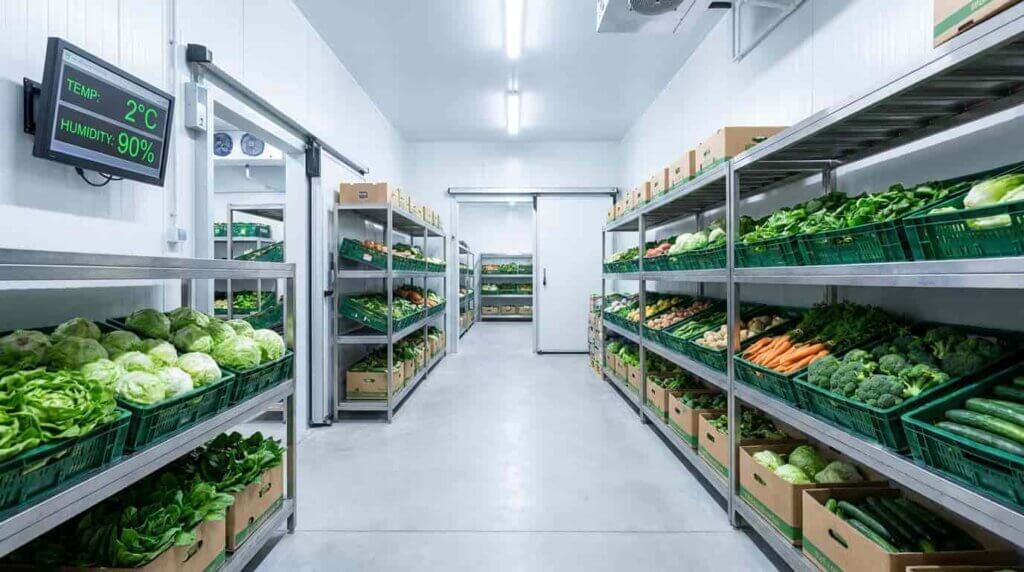
- Install real-time sensors for temperature, humidity, and ethylene to catch fluctuations early.
- Enable instant smartphone alerts to respond immediately to environmental deviations; delayed reactions often lead to irreversible product loss.
- Calibrate sensors regularly to ensure accurate, reliable readings; false data can silently degrade produce under inappropriate storage conditions.
- Leverage monitoring data to optimize performance and prevent recurring issues.
6. Training Your Cold Room Team
- Train staff on proper produce handling, temperature checks.
- Include emergency response procedures for power outages or equipment failures in regular training.
- Reinforce best practices through routine refreshers to minimize human error and maintain operational efficiency.
7. Reduce Product Handling to Minimize Stress
Minimize the handling of vegetables to avoid bruising and stress. Plan workflows to reduce opening and closing the cold room, and use gentle, efficient tools to move produce. By minimizing handling, you also avoid unnecessary bruising and stress that can harm the quality of your organic produce.
8. Prevent Cross-Contamination
Keep different types of vegetables separate to avoid cross-contamination. Use clearly labeled bins and storage areas for organic and non-organic items, ensuring that no contamination occurs. Cross-contamination can lead to flavor contamination and affect both the appearance and quality of your vegetables.
9. Cold Room Maintenance & Regular Inspections
Conduct routine maintenance on cooling systems and check for leaks, temperature variations, or damaged seals. Regular inspections ensure your cold room operates efficiently and prevents unexpected failures.
10. Utilize Energy-Saving Techniques
Improve energy efficiency by using high-performance insulation, LED lighting, and energy-efficient refrigeration. These measures reduce costs and help maintain a stable environment for your vegetables.