


The need for mobile cold storage is growing globally. Converting existing shipping containers into refrigerated containers can save money and reuse resources. How to Build a Refrigerated Container? How can this conversion be done professionally?
You can also check out our refrigerated container guide for more product information.
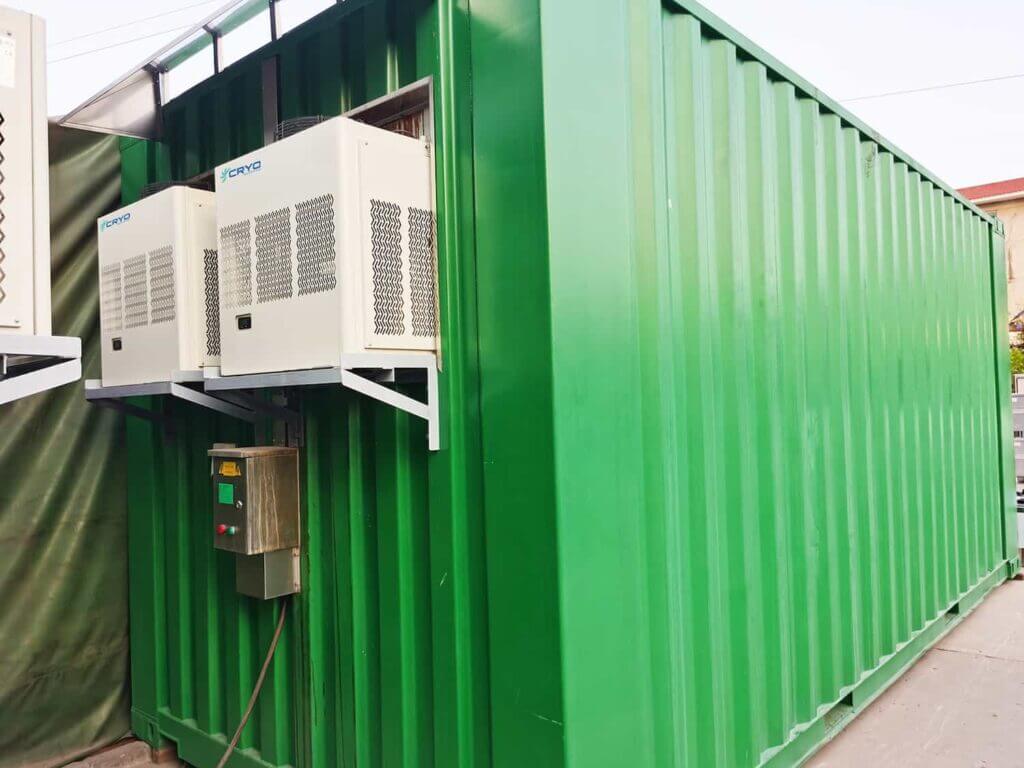
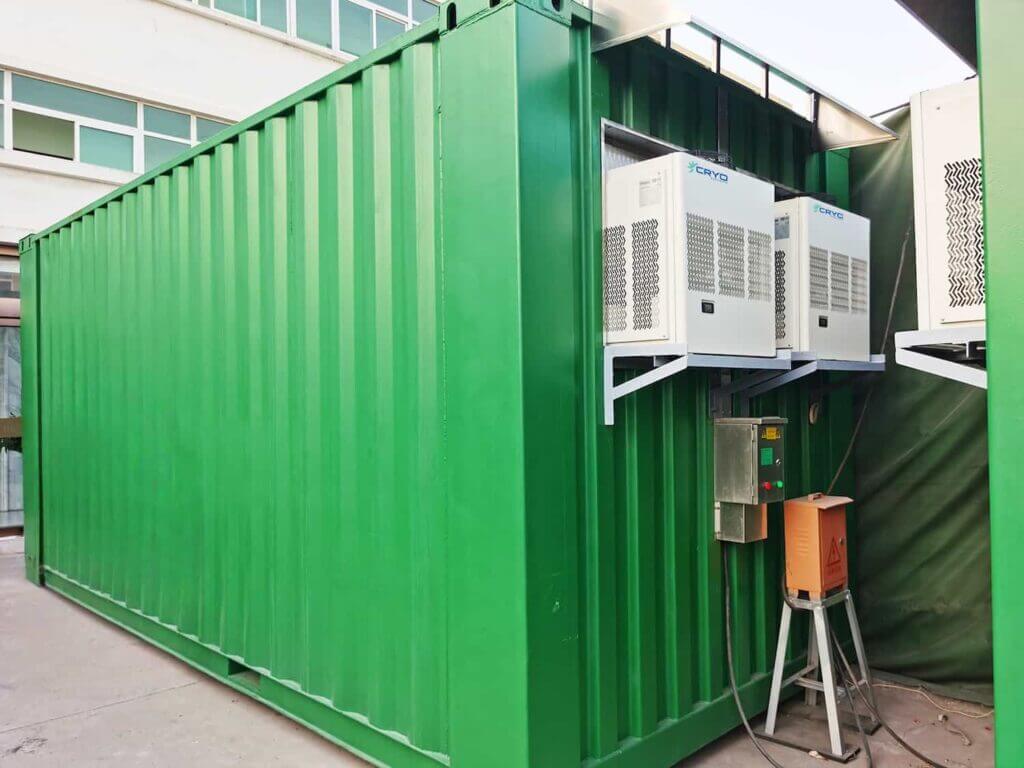
Step 1: Prepare Materials and Tools
First, choose the right insulation panels based on the container size and cooling needs. PU panels are common due to their excellent insulation. Next, select a refrigeration unit based on the container’s volume and required cooling power. This unit is the core of the refrigeration system. You will also need lights, switches, pipes, wires, cable ties, screws, and other small items.
For tools, you’ll need a forklift or crane, electric drill, screwdrivers, wrenches, cutting tools, a level, and a tape measure. The number of tools depends on how many units you are installing and how many workers are on the job.
Also, prepare auxiliary materials like foam sealant, caulking guns, electrical tape, and waterproof sealant. The amount of these materials depends on the number of units being installed.
Step 2: Clean the Shipping Container
Begin by thoroughly cleaning the shipping container. Remove all dirt and debris to make sure the inside is clean. Grind and wash away any rust or stains on the interior walls and floor. If there are old sealing materials, remove them with a scraper or utility knife. After cleaning, check the container’s structure for any damage or dents. Fix any problems found.
Step 3: Install Insulation Panels
Installing the insulation panels is key for good cooling. First, cut and shape the panels precisely to fit the container’s inside measurements. Start at one end of the container. Stand the panels upright against the inner walls and ceiling, making sure they fit tightly together. Use special connectors to fix the panels to the container frame. Ensure panels are secure, flat, and not loose. Use a level during installation to make sure panels are straight. This improves insulation.
Step 4: Install the Refrigeration Integrated Machine
The monoblock refrigeration unit is usually installed on the outside end of the container. First, unpackage the unit and check for any dents or damage. Use a forklift to move the unit to the installation spot. Then, follow the installation manual. Pay attention to the unit’s air inlets and outlets to ensure good airflow. This prevents cooling problems. Also, properly seal the unit to the container to keep out rain and dust.
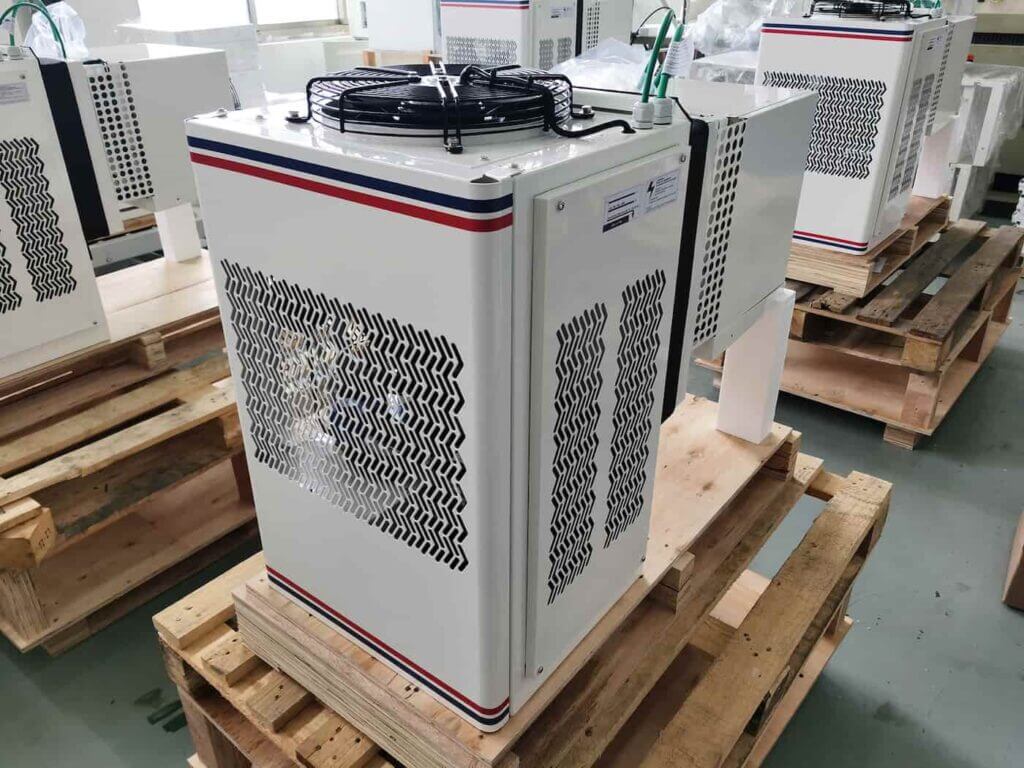
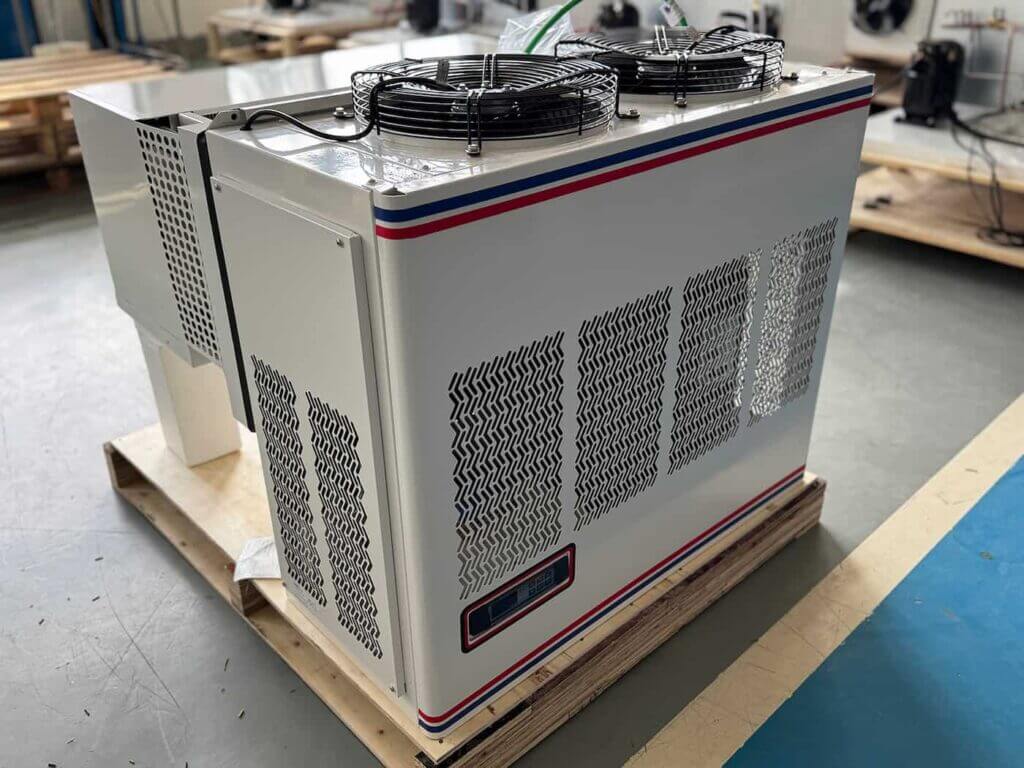
Step 5: Install the Drainage Pipe
First, make a drainage hole at the right spot on the bottom of the container. Connect one end of the drainage pipe to the water collection point inside the container. Lead the other end out through the drainage hole to the outside. Make sure the pipe slopes down to allow for good drainage. Use sealant at all connection points to prevent leaks.
Step 6: Seal Insulation Panels with Foam
There will be gaps between the container body and the insulation panels, and around the drainage pipe. Insert the foam gun nozzle deep into these gaps and apply foam evenly until fully filled. Wait for the foam to harden completely, then trim any excess material. After that, apply structural adhesive sealant and waterproof mastic sealant. This creates a good seal, stopping cold and hot air from mixing and improving the refrigerated container’s insulation.
Step 7: Install Interior Lighting
Installing interior lighting is quite simple. Decide where to place the lights based on the container’s layout and lighting needs. Usually, they go in the middle of the container’s ceiling. Install the light switch on the right side near the door inside the container. Make sure the lights are secure and wired correctly. After installation, test the power to check if the lights work properly.
Step 8: Connect the Main Power to the Unit
Connecting the main power to the unit must be done by a professional electrician. Always cut off all power before connecting or changing wires to prevent injury. Follow the electrical diagrams strictly. Make sure connections are correct and secure to avoid short circuits or electrical leaks. After wiring, perform insulation and power tests to confirm the circuit works correctly.
Step 9: Inspect and Clean Inside the Container
Once all installation work is done, fully inspect and clean the inside of the refrigerated container. Check if the insulation panels are firmly installed and well-sealed. See if the monoblock refrigeration unit runs well and meets cooling requirements. Check if the drainage pipe drains properly and if the lighting works. Fix any issues found during this inspection quickly.
By following these steps, a shipping container can be effectively turned into a fully functional refrigerated container. This process involves integrating several systems, but with standard procedures and proven materials, the conversion cost is manageable. The work usually takes 3 to 7 days. This solution is especially good for small to medium businesses, farmers, and temporary overseas project cooling needs. If you plan to deploy many of these refrigerated containers, consider factory prefabrication and custom integration for better efficiency and quality.
For more details on refrigerated container conversion plans, advice on choosing cooling equipment, or custom quotes, please contact our team. We’ll provide you with complete cold room solutions.