


What is a Refrigerated Container?
A refrigerated container (also known as a cold room container or freezer container) is an insulated shipping container equipped with a built-in cooling system. It can maintain a specific temperature range, usually between -40°C to +30°C, depending on the product requirements.
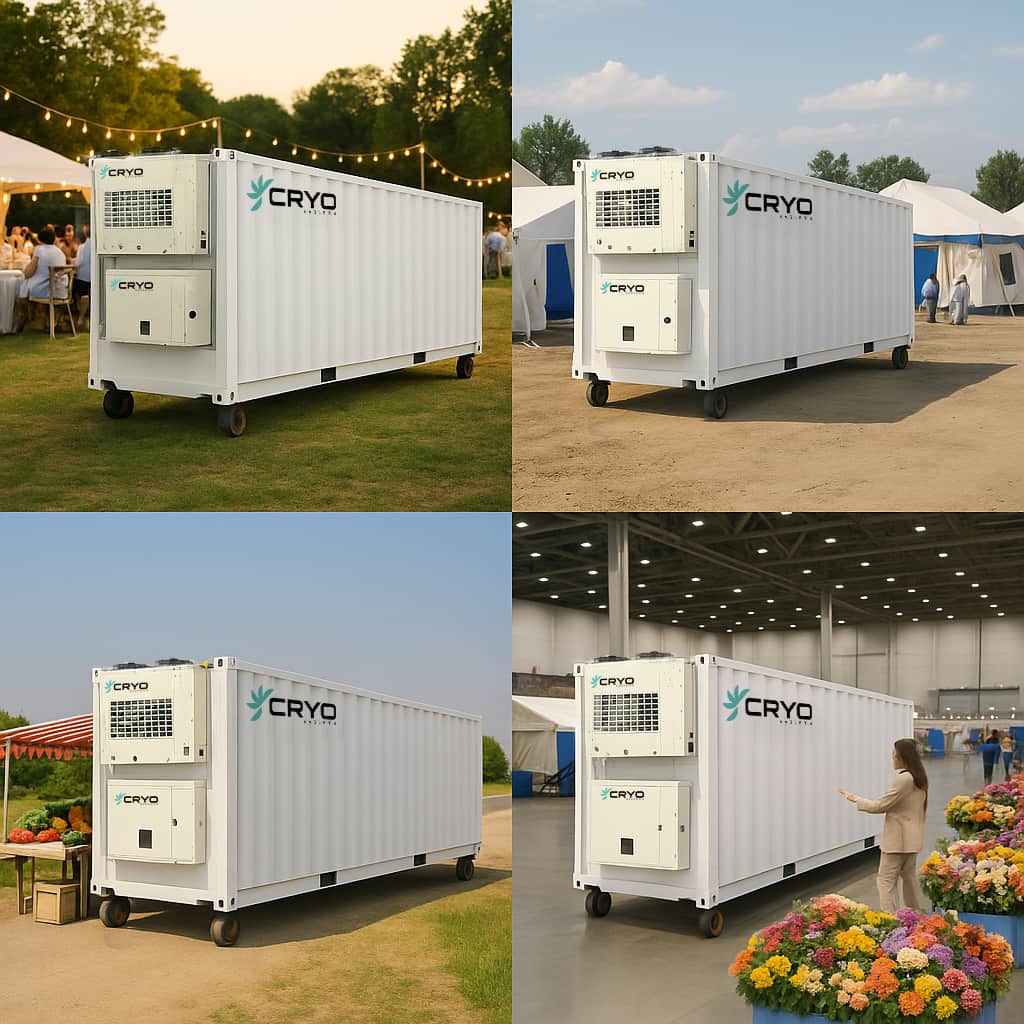
Unlike a traditional cold room built inside a building, a cold room container is mobile, modular, and easy to install, making it ideal for businesses that need flexibility or temporary cold storage.

Benefits of Using a Cold Room Container
For many industries, cold storage is essential. Using a cold room container offers clear, practical advantages for businesses that need reliable cold storage or transport. Here’s why many companies choose this solution:
- Fully Mobile – Move your cold storage anywhere you need it, whether at a construction site, farm, port, or event location.
- Quick to Deploy – No need for lengthy construction. Simply position the container, connect the power, and start storing your products.
- Lower Investment – Avoid the high costs of building a permanent cold room while still enjoying the same cooling performance.
- Flexible Temperature Control – Set and maintain the exact temperature your products need, from deep freeze to chilled storage.
- Adaptable to Any Industry – Suitable for food, pharmaceuticals, flowers, beverages, and more.
- Expandable Capacity – Add extra containers as your business grows or during peak seasons.
- Durable and Weather-Resistant – Built to handle outdoor conditions without affecting cooling performance.
- Easy Relocation and Resale Value – Relocate your container to a new site or resell it when no longer needed.
Types of Refrigerated Containers
Cold room containers are not all the same — they are designed in different ways to meet specific needs. Understanding these types will help you choose the best solution for your products.
By Size
- 10ft Refrigerated Container – Compact, easy to place in tight spaces, suitable for small-scale storage or events.
- 20ft Refrigerated Container – A balanced option for medium storage capacity and easier transportation.
- 40ft Refrigerated Container – Large capacity for bulk storage or long-distance shipping of high-volume goods.
By Function
- Standard Reefer Containers – General-purpose cold storage for a wide range of goods.
- Blast Freezer Containers – For rapid freezing to lock in freshness and preserve quality.
- Multi-Temperature Containers – Separate compartments with different temperatures for mixed cargo.
- Controlled Atmosphere (CA) Containers – Maintain specific oxygen, CO₂, and humidity levels to extend the shelf life of fresh produce.
- Modified Cold Room Containers – Customized designs for special storage or processing requirements.
Common Applications
Food & Beverage – Store or transport fresh produce, meat, seafood, dairy, and beverages while maintaining freshness from farm to market.
Pharmaceuticals – Keep vaccines, medicines, and lab samples within strict temperature ranges during storage and delivery.
Floriculture – Preserve flowers and plants during shipping or at distribution hubs to maintain quality.
Events & Catering – Provide temporary cold storage for outdoor events, festivals, or catering services.
Logistics & Shipping – Transport perishable goods safely over long distances in both domestic and international trade.
How to Choose the Right Refrigerated Container
Selecting the right refrigerated container or cold room container is essential to protect your products, control costs, and ensure smooth operations. Here are the key factors to consider in detail:
- Temperature Range
- Different products require different storage temperatures. For example, frozen seafood may need -20°C or lower, while fresh produce may require -2°C to +5°C.
- Make sure the container’s cooling system can maintain your target range even in hot or humid climates.
- Size & Capacity
- Common sizes include 10ft, 20ft, and 40ft. Smaller units are ideal for limited spaces or mobile operations, while larger units are best for bulk storage or shipping.
- Consider both current needs and potential future demand so you avoid outgrowing your storage too soon.
- Energy Source
- Electric-powered units are cost-efficient for stationary use.
- Diesel-powered units provide flexibility for locations without a reliable power supply.
- Hybrid systems can switch between electric and diesel for maximum flexibility.
- Location & Mobility
- If your operations move frequently (e.g., seasonal harvesting, event catering), a mobile cold room container is the best choice.
- For long-term stationary use, ensure the site has stable ground and adequate access for loading and unloading.
- Compliance & Certification
- Make sure the container meets food safety standards.
- For international shipping, check that the container complies with CSC (Container Safety Convention) and other relevant regulations.
- Additional Features(Optional but valuable)
- Temperature monitoring systems for real-time control and alerts
- Multi-temperature compartments for storing different products in one unit
- Enhanced insulation for energy savings in extreme climates
Buying vs. Renting a Cold Room Container
| Analysis Dimensions | Renting is better | Buying is better |
|---|---|---|
| High cash flow pressure | ✅ | ❌ |
| Short usage cycle and high volatility | ✅ | ❌ |
| Lack of cold chain technology team | ✅ | ❌ |
| Requires high customization | ❌ | ✅ |
| Requires rapid expansion or cross-regional allocation | ✅ | ❌ |
| Emphasis on asset accumulation and financial depreciation | ❌ | ✅ |
| Usage cycle ≥ 5 years | ❌ | ✅ |
For a detailed comparison, check our in-depth guide: Lease vs Purchase of Refrigerated Containers: Which is More Cost-Effective? Professional Analysis
Why Work With a Trusted Supplier
According to Cognitive Market Research, the global refrigerated container market is expected to expand at a compound annual growth rate (CAGR) of 13.00% between 2023 and 2030. North America held the largest market share in 2023, accounting for approximately 30% of global revenue. Meanwhile, the Asia-Pacific region is emerging as the fastest-growing market for refrigerated containers.
Partnering with a trusted supplier is crucial to navigating this rapidly evolving industry. Reliable suppliers offer high-quality refrigerated containers designed to meet stringent industry standards, ensuring product safety and longevity. CRYO is an excellent choice. We provide expert guidance on choosing the right solutions tailored to specific market needs.
Moreover, choosing us for your refrigerated container ensures you get:
- Reliable equipment
- Professional installation
- 24/7 technical support
- Competitive pricing and flexible plans