


As global cold chain logistics and fresh food supply chains grow, Reefer Containers (or Cold Room Containers) are becoming super popular. Why? Because they’re modular, mobile, and quick to set up. This makes them useful for lots of industries and real-world situations.
- Modular Design: Easy to lift, move, and combine. Great for places without existing cold storage.
- Faster Build Time: Much quicker to set up than traditional cold storage buildings.
- Flexible Power: Can run on grid power, diesel generators, or even solar!
- Flexible Operations: Perfect for rentals, short-term projects, or emergency cooling.
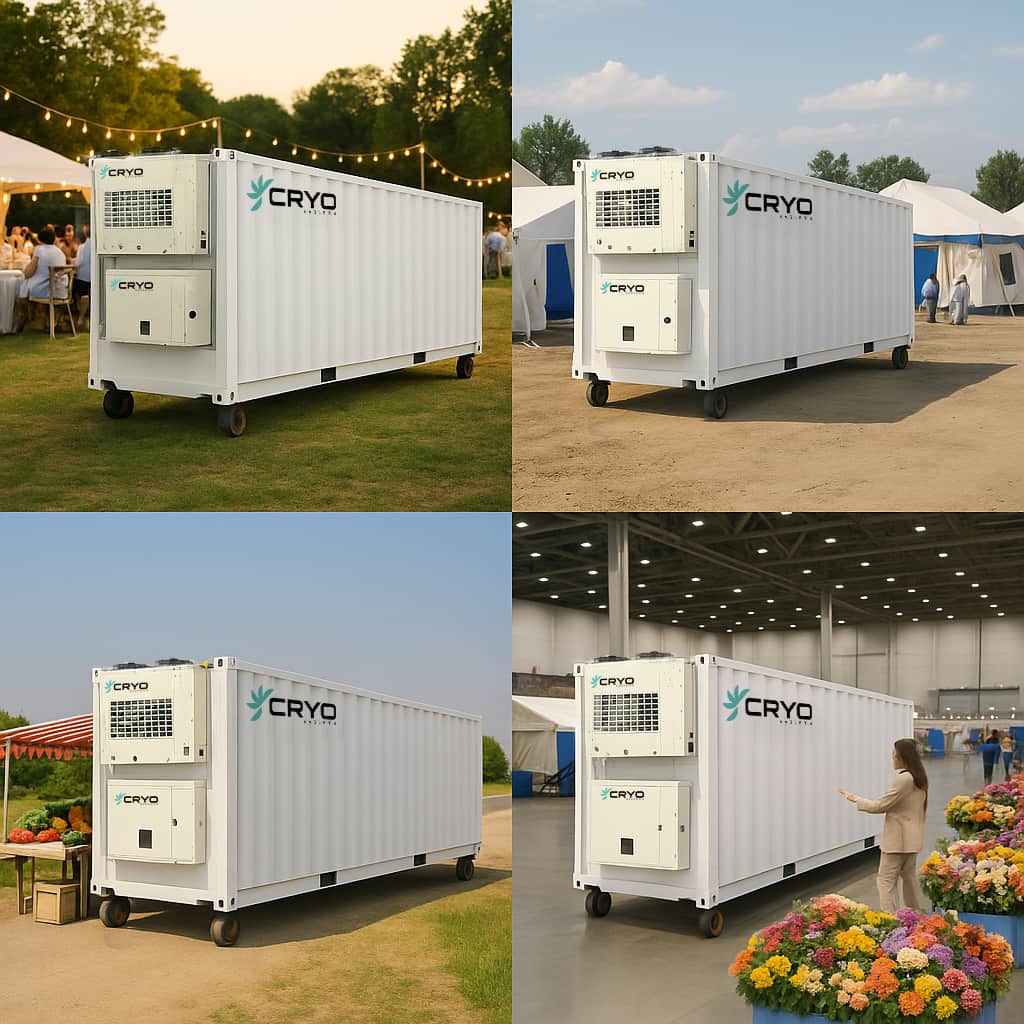
Portable Cold Storage Solutions for Fresh Produce & Floriculture
When fruits, veggies, and flowers are picked, they spoil fast because of temperature and humidity. Fresh produce breathes, giving off heat. For every 10℃ increase, their breathing speeds up 2-3 times (the Q10 rule). Refrigerated containers can be used as mobile cold storage right where they’re picked. This is great because they can quickly move produce from hot fields into the right cool environment.
For example, for berries like strawberries and blueberries, a reefer container’s temperature and humidity control can really make them last longer, cutting down on spoilage. Pick a 20 or 40-foot reefer. Check the cooling system. Put it on flat ground. Make sure it’s level. Connect 380V three-phase power. Set the right temperature. Different produce needs different temps. Check the temperature twice a day. Disinfect inside weekly. Stack goods to allow airflow. Use first-in, first-out (FIFO). Check door seals often.
Rapid Pre-cooling Systems for Agricultural Post-Harvest Processing
Pre-cooling is key for keeping produce fresh. It quickly removes field heat after harvest, slowing down breathing and aging. Reefer containers can do simple, quick pre-cooling. Take pressure cooling, for example: the fan inside the reefer creates a pressure difference, forcing cold air quickly through the produce to remove heat. For leafy greens like lettuce and spinach, pre-cooling within 1-2 hours after picking can greatly extend their shelf life.
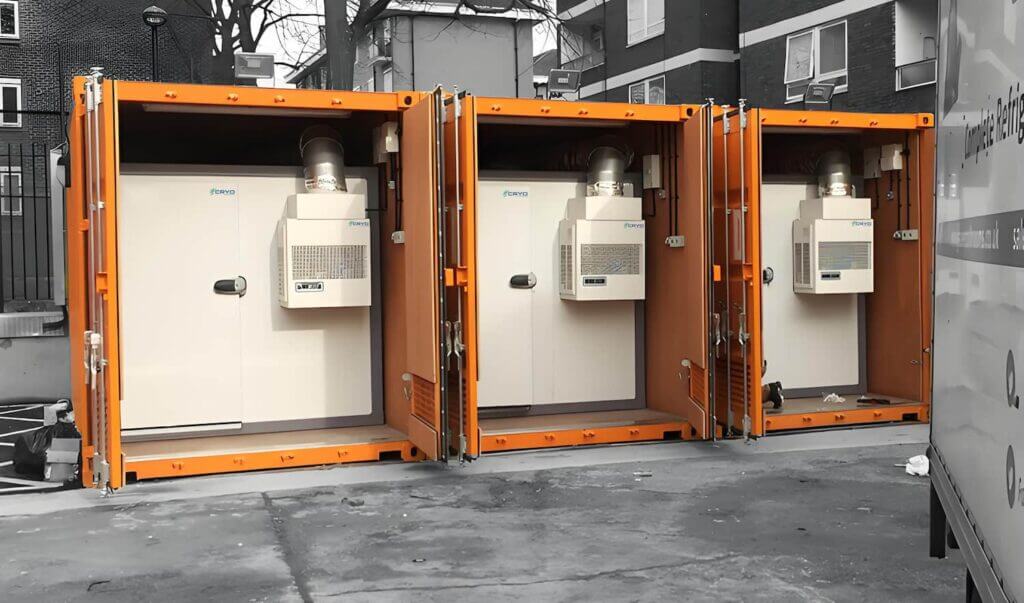
Marine Cold Storage: Refrigerated Containers for Seafood Industry
Refrigerated containers can be used as storage at fish farms and fishing ports. Live fish and shellfish need cool, steady temperatures and lots of oxygen. Reefers can be customized with oxygen systems and the right cooling. They can also have thicker insulation, stainless steel or food-grade anti-corrosion inner walls, and better drainage.
Quickly clean and sort seafood after catching, then load it into a reefer. Set the right temperature for freezing. This keeps the seafood’s quality and taste.
Shared Refrigerated Container Solutions for Wholesale Food Markets
Agricultural wholesale markets are busy places with lots of goods moving fast. But many vendors don’t have enough cold room. This is where refrigerated containers become the perfect “shared cold room” solution. They can be rented out, offering flexible cooling for many different businesses. This model is super adaptable! Different vendors need different temperatures and space, and reefers’ modular design and custom options fit these needs perfectly.
For example, a fruit seller might need 0-10℃, while a meat seller needs below -18℃. Market managers can rent out reefers with different temperature settings to the right vendors. Plus, cold room containers are mobile, so the market layout can change with business needs, making better use of space. When using them, vendors just need to set the right temperature and humidity for their goods and check on them regularly.
Is it more cost-effective to rent or buy? Read this article to learn more.
E-commerce Cold Chain: Refrigerated Containers for Online Food Delivery
In the fresh food e-commerce world, hub warehouses and front-end warehouses need top-notch freshness. Freezer containers can be part of these cold storage setups or even stand alone as small cold rooms.
- At a hub warehouse, lots of fresh food needs to be sorted. Reefers can be divided into separate storage areas for different types of goods, each with its own temperature.
- For front-end warehouses, reefers can be set up quickly to handle short-term storage and quick turnover of fresh food.
Emergency Backup Cold Storage for Temperature-Sensitive Logistics
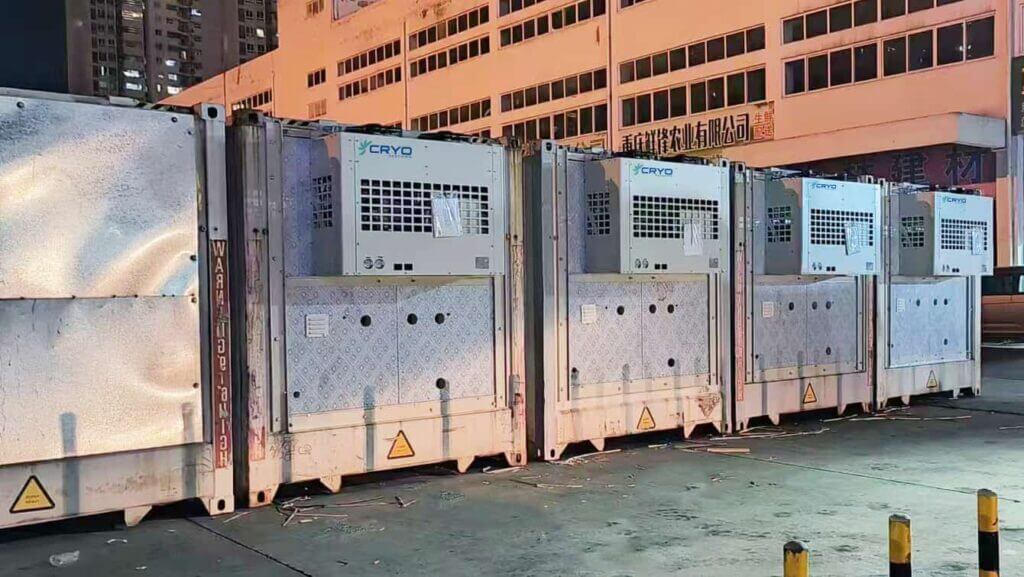
During big festivals or busy seasons, logistics companies’ own cold storage often gets “jammed.” Refrigerated containers can be a great emergency solution. They can handle sudden storage peaks or act as transfer points during transport. If a cold storage spot along a logistics route runs out of space, a reefer can be quickly moved there for temporary use. They can also be centrally monitored with shared power, making them great for batch deployment.
Pharmaceutical Cold Chain: Mobile Refrigeration for Medical Supplies
Vaccines and biological products are super sensitive to temperature changes. Most need to be stored and transported at a steady 2-8℃.
- For storage, reefers can be placed near medical production sites or warehouses for temporary or extra storage. When using them, first clean and disinfect the reefer thoroughly to remove any possible contamination. Then, stack vaccines and other medical products as required.
- For transport, reefers play a huge role. They can be hooked up to transport vehicles, creating a mobile cold transport unit. This ensures medical products stay cold from the production site all the way to the hospital.
Solar-Powered Refrigerated Containers: Sustainable Cold Storage Solutions
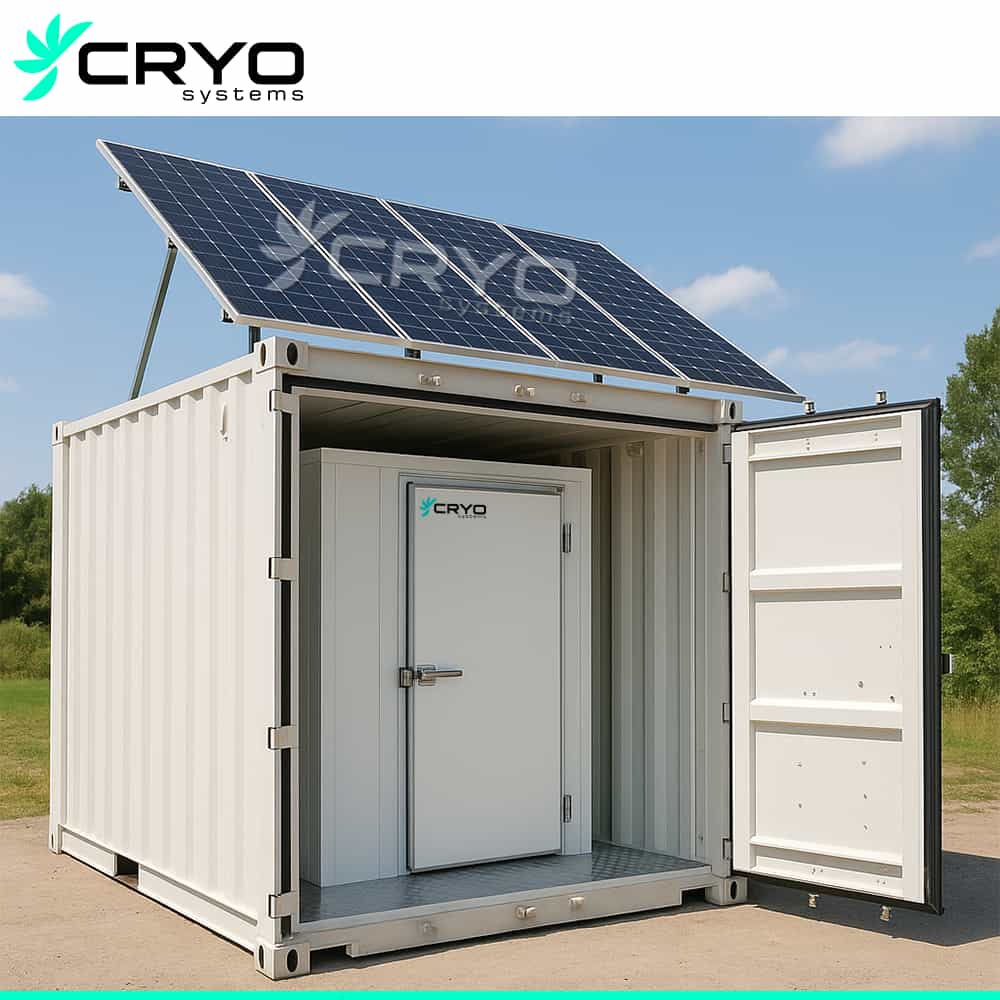
This is a cool new idea that mixes green energy with cold room, especially handy for places with unreliable power or far-off spots like rural farms or outdoor work sites. The main idea is that solar panels collect sunlight and turn it into electricity. This power is stored in batteries and then used to run the reefer’s cooling system and other gear. This means it’s self-sufficient and eco-friendly! The biggest perks are less reliance on the traditional power grid, lower running costs, and less carbon pollution since solar is clean energy.
If you need a more specific refrigerated container solution for your business, please contact us! We offer full service, from design and manufacturing to transport and setup.
Further Reading:
-
[ View: The Complete Guide to Refrigerated Containers ]
Understanding Types, Selection, Use, and Maintenance of Refrigerated Containers -
[ Operation: Converting a Shipping Container to Refrigerated ]
In addition to leasing and purchasing, you can also choose to convert a shipping container into a refrigerated container yourself